The making of a new-era IT leader
AI has changed what IT does. The job of leading has changed even more.




Key takeaways
As AI absorbs more execution work, the most valuable IT leadership skills have shifted from technical depth to human ones such as reading how workers adapt, building cross-functional ownership, and cultivating judgment.
AI projects that deliver the most business value are structured with joint ownership between IT and the lines of business.
The CIO's job now includes actively creating conditions where human judgment has room to operate—not just deploying AI, but deciding what it shouldn't replace.
As AI takes on more of the work that IT teams were hired to do, from employee onboarding to outage resolution, it’s leaving CIOs and other IT leaders exposed.
CIOs have been a vector for a range of impacts in the last five years, from pandemic-induced work from home to hybrid work, and now the pressures to adopt AI and all that entails. And while the new technologies have helped move IT from service provider to strategic business partner, it has also changed the shape of what it means to lead, as well as the skills it requires.
"The best CIOs I know aren't winning because of their technical depth," says Ashwin Ballal, CIO at Freshworks. “They're winning because they can build teams that know how to work alongside AI and bring the judgment that AI can't."
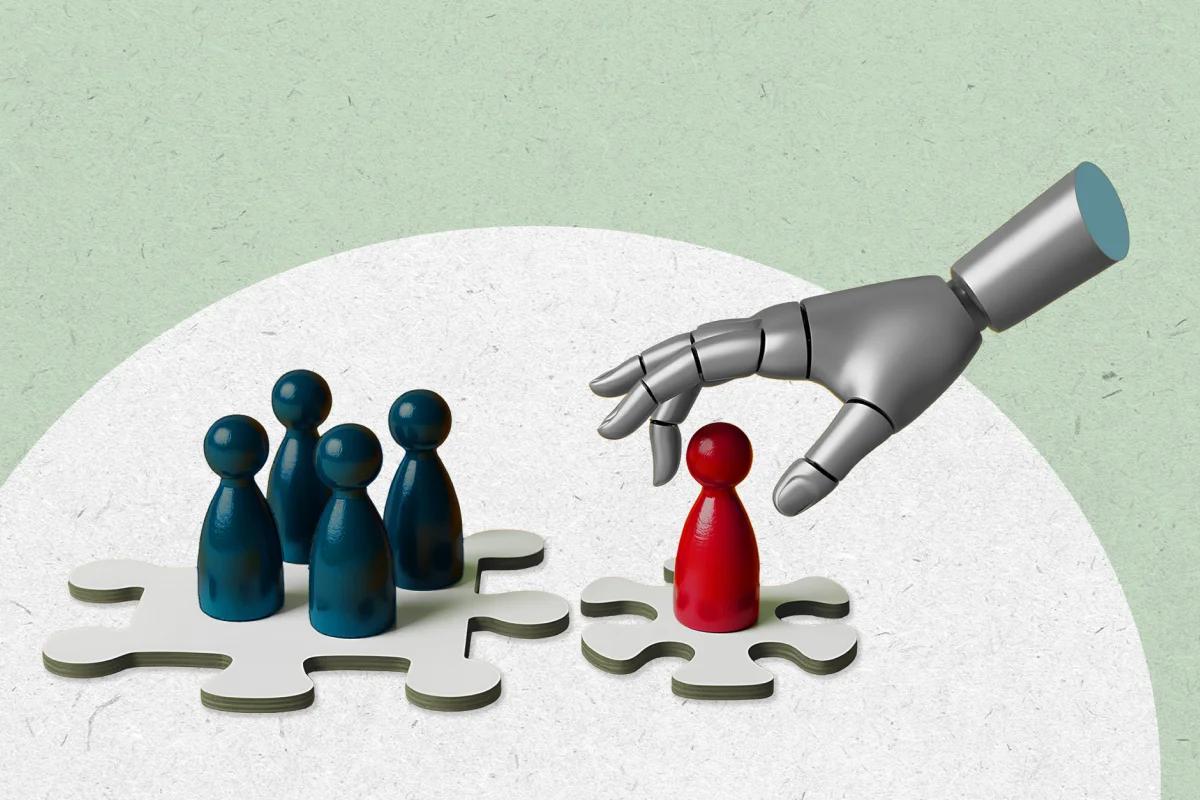
A new kind of “hybrid” workplace is emerging, made up of AI (or “digital employees”) and employees. As CIOs navigate this change, what must not be lost is the ability to manage humans and to draw out the uniquely human qualities that help these new hybrid teams succeed.
Technical fluency isn’t going away, but other skills are in ascendance: the ability to read how workers are actually adapting to AI, building cross-functional ownership to keep projects out of pilot purgatory, and actively creating the conditions where human judgment—the kind AI can't replicate—has room to operate.
In other words, technical wizardry was once the golden ticket to the top tech job. Now it's table stakes.

Chief enabler
While many leaders may want to get ahead of employee anxiety about change with a clear vision of how roles will evolve, Mark Settle, a former CIO and author on technology leadership, thinks that's the wrong instinct. "It's probably less important that IT leaders explain to their teams how their roles will change in the future and far more important that they listen to their teams and learn about how AI is being used to change conventional work practices," he says.
The best CIOs I know aren't winning because of their technical depth. They're winning because they can build teams that know how to work alongside AI and bring the judgment that AI can't.
Ashwin Ballal
CIO, Freshworks
At Citi, for example, leaders created a network of more than 4,000 employee “AI champions” who volunteer to help colleagues learn how AI tools fit into their daily work. The peer-driven program has helped push AI adoption across the bank while reframing AI as something employees can shape rather than something imposed on them.
“Truly strong employees are some of the biggest advocates and early adopters of AI,” Settle says. “They never enjoyed doing the work that's being automated and are happy that they can sidestep some of the drudgery commonly associated with their roles.”
Ambassador and coalition builder
Counterintuitively, the worst thing IT leaders can do is ensure their projects remain IT projects. In the age of AI, partnering with business units is essential to driving value for the organization as a whole.
“The mistake CIOs make all the time is letting AI projects turn into IT projects instead of business projects, and allowing themselves to be drawn into making promises that they can't keep,” says Settle.
A 2025 BCG analysis of more than 1,200 companies found that organizations deriving real value from AI consistently structured projects across business units with joint ownership between IT and the business owner.
It falls to CIOs to manage these co-productions, with the lines of business owning the problems being solved and the outcomes being measured, while IT owns the environment that makes it possible, such as the platform, governance, security, and operational discipline. "The CIO is the conductor," says Wendy Turner-Williams, chief data and intelligence officer at SymphraAI. "IT is the venue, and the business units are the orchestra sections, each contributing their expertise to create the final performance."
Read more: How this CTO builds a foundation for AI
Chief human officer
The best IT leaders treat AI as a capability multiplier. But as AI absorbs the automatable work, what's left is fundamentally human—and it falls to CIOs to actively cultivate it.
The human qualities that matter in a hybrid team are ones that require deliberate encouragement: curiosity about whether AI got it right, the confidence to challenge outputs, the judgment to know when to escalate. "AI processes signals at scale," says Turner-Williams. "Humans bring experience, ethics, and business understanding. That combination is what turns automation into real enterprise intelligence."
Building that culture starts with how CIOs model the human side of the equation themselves. For Ballal, that means holding a clear standard for the technology’s role. "AI may automate tasks, but it can't replace the human-centered leadership that makes technology work for people," he says. "As a CIO, my job is to make sure the experiences I design—for employees or for customers—are ones I'd want to receive myself. That standard doesn't change just because AI is doing more of the work."