Why 47% of your workforce is working in the dark
An analysis of IT requests shows the rise of a “ghost shift” as flexible jobs have extended the workday. IT support isn’t keeping up.




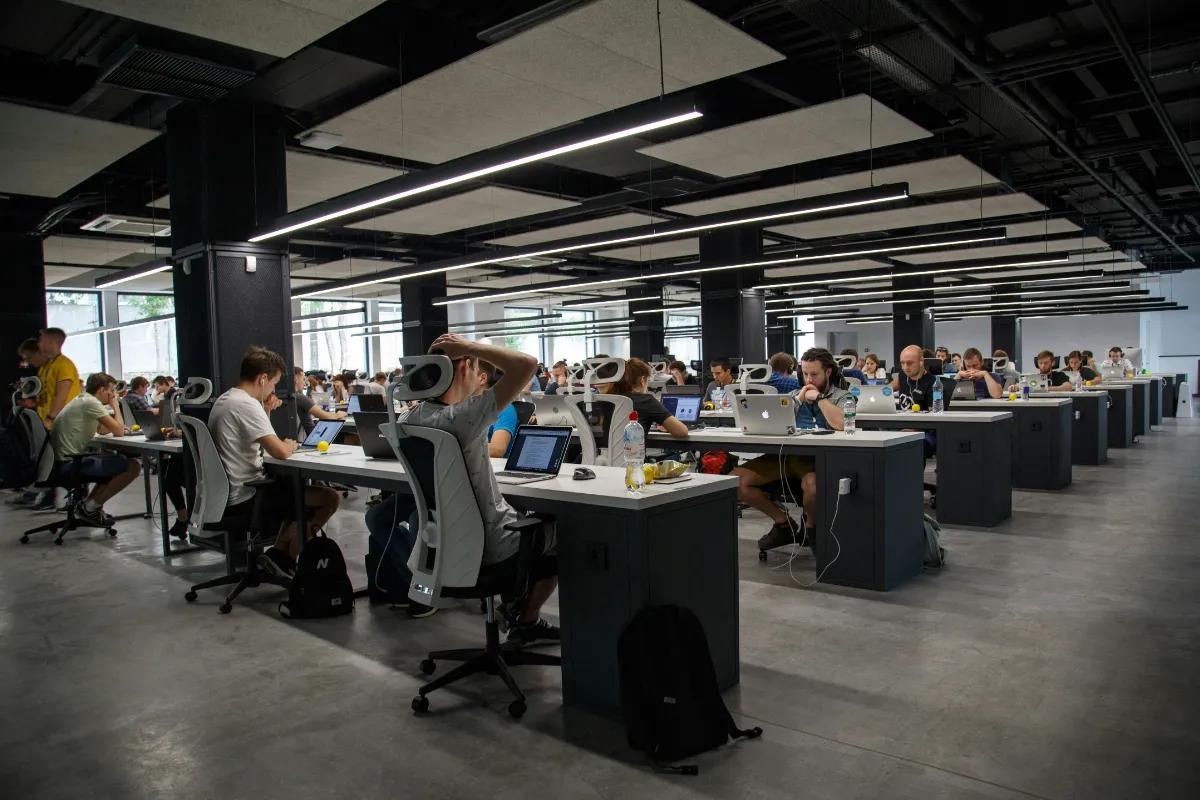
Flexible workplace rules have made it easier for employees to work anywhere, any time. Have laptop, will work. This has created a “ghost shift” of workers on the job outside of the traditional 9-to-5. But new data from Freshworks shows that IT support isn’t keeping up.
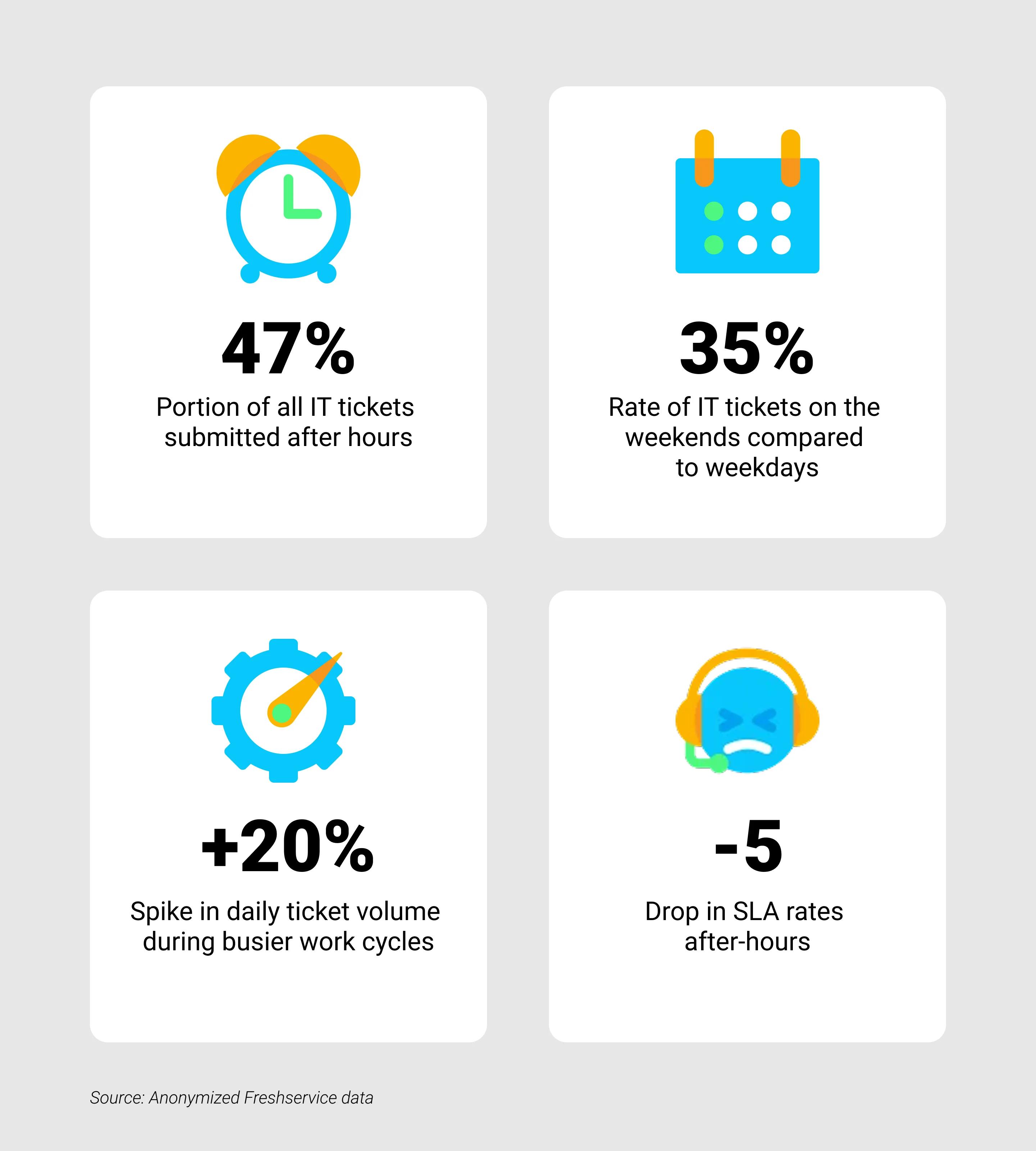
A new analysis of anonymized Freshservice customer data, including millions of IT service interactions between September 2025 and March 2026, found that nearly half of all IT tickets (47%) are submitted outside standard business hours. Weekend volume runs at about one-third (35%) of weekday daily levels with the same consistency. And though a response almost always comes, it typically takes at least an hour longer than during business hours.
What was once considered late-night exceptions have become the norm, and this “ghost shift” is often at times when IT has moved to evening hours or on-call rotations.

Even as workers are empowered with tools to work anywhere at any time, companies are setting up an employee experience showdown, leaving "ghost shift" workers to hunt their own Slack channels for faster answers. As workers wait for IT to respond to their after-hours requests, IT teams feel set up to fail, since they’re not in the office when the requests come in. This schedule disconnect isn't just a mutual annoyance, it reduces productivity and effectiveness, and increases security risks. When a critical security patch or login failure occurs at 8 p.m., an extra hour of delay isn't just a lag, it's actually a vulnerability window.
One answer is to throw bodies at the problem. Another is to consider how automation can narrow the gap. To support “ghost shift” workers, businesses must stop asking their teams to work later and start asking their technology to work harder. AI-driven service execution can provide the always-on infrastructure that a modern, 24/7 workforce requires.
We're not promoting it as, 'we're never going to be here for you again.' We're also not a 24/7 shop, so we're able to give you options after business hours.
Robert Lyons
CTO, Katz Media Group
Same issues, different support
After-hours tickets aren’t taking longer to resolve because they're harder. Mostly, they are password resets, MFA unlocks, and access requests, according to patterns in the Freshservice data. Even after hours, only 6-8% of these tickets are escalated, matching business-hours rates across every month in the dataset. The problems employees encounter at 9 p.m. are no more complex than the ones they encounter at 9 a.m., but they do need addressing. The data showed that resolution rates lagged, with SLA rates falling 2–5 percentage points after hours throughout the period, peaking at a 5-point gap in October.
The disconnect shows up most clearly during certain business cycles, such as end of quarter, when many non-IT employees are often working extra hours to close deals. Freshservice trends showed a roughly 20% spike in daily ticket volume in the final days of March 2026 as more demand hit IT systems already running slower. December moved in the opposite direction, likely depressed by holiday patterns.
How McLaren, New Balance & more turn service performance into a competitive edge

Business disruption in the making
When IT support lags, the effects rarely stay inside the IT department. At Carrefour Belgium, where 700,000 customers shop daily across hundreds of stores, CTO Stijn Stabel says an IT glitch doesn't just create a help desk ticket, it can cascade into empty shelves and disrupted store operations. "An IT glitch can lead to certain shelves being empty," he says. For retailers, manufacturers, and any organization where IT underpins operations, delayed resolution is a business risk.
An opportunity for automation
Some companies have begun tackling after-hours support with new tools and processes. At Katz Media Group, CTO Robert Lyons has approached after-hours IT support with expanded AI-powered self-service.
"We're not promoting it as, 'we're never going to be here for you again,'" he says. "It's just another way to provide another channel to get you assistance faster. We're also not a 24/7 shop, so we're able to market it as giving you options after business hours."
The official workday isn’t expanding. But for employees who opt to work longer, automation gives companies a way to support them without asking IT to clock in.