Top ITOM tools in 2026: Best IT operations management platforms
Explore the top ITOM tools in 2026. Learn how modern IT operations management software supports automation, visibility, and resilience across hybrid environments
IT operations management (ITOM) has become a foundational discipline for organizations operating across hybrid, multi-cloud, and distributed infrastructure environments. As digital services scale and complexity increases, IT teams can utilize ITOM tools to maintain visibility, detect issues early, automate response, and ensure service reliability.
This guide examines the top ITOM tools in 2026, explains the core capabilities of modern IT operations management software, and outlines how organizations can evaluate ITOM platforms based on operational outcomes rather than vendor hype.
What is ITOM?
ITOM refers to the processes, tools, and practices used to monitor, manage, and optimize IT infrastructure and services, specifically focusing on maintaining the health, availability, and performance of systems that support business-critical applications.
In terms of scope, modern ITOM platforms typically cover:
Event and alert management
Infrastructure monitoring across servers, networks, and cloud resources
Incident and problem management workflows
Configuration management and CMDB visibility
Automation, orchestration, and remediation
Service health monitoring and observability
AIOps-driven analytics and anomaly detection
Market Context and ITOM Trends in 2026
The ITOM market continues to expand as enterprises modernize their technology stacks and adopt SaaS-based operations tools. Several trends are shaping how IT operations tools are selected and deployed:
Cloud-native operations: ITOM tools increasingly support dynamic, ephemeral cloud resources, including containers, microservices, and serverless environments.
Hybrid and multi-cloud visibility: Organizations require unified visibility across on-premises infrastructure, public cloud platforms, and SaaS services.
AI-driven automation and AIOps: Machine learning is used to reduce alert noise, identify anomalies, correlate events, and recommend remediation actions.
Dependency mapping and topology awareness: Modern ITOM platforms automatically map service dependencies to improve root cause analysis and impact assessment.
Real-time analytics and shift-left operations: Operations teams are moving issue detection earlier in the lifecycle, reducing MTTR and improving service uptime.
Seven core features to look for in ITOM software
The best ITOM tools share a consistent set of foundational capabilities including:
Infrastructure monitoring: Comprehensive monitoring across servers, networks, storage, databases, and cloud services enables teams to detect performance issues before they impact users.
Event and incident management: ITOM platforms ingest large volumes of telemetry data, normalize events, and prioritize incidents based on business impact.
Configuration management and CMDB: Accurate configuration data and dependency relationships provide context for incident resolution and change planning.
Automation and orchestration: Automation reduces manual effort by triggering workflows for remediation, scaling, and routine operational tasks.
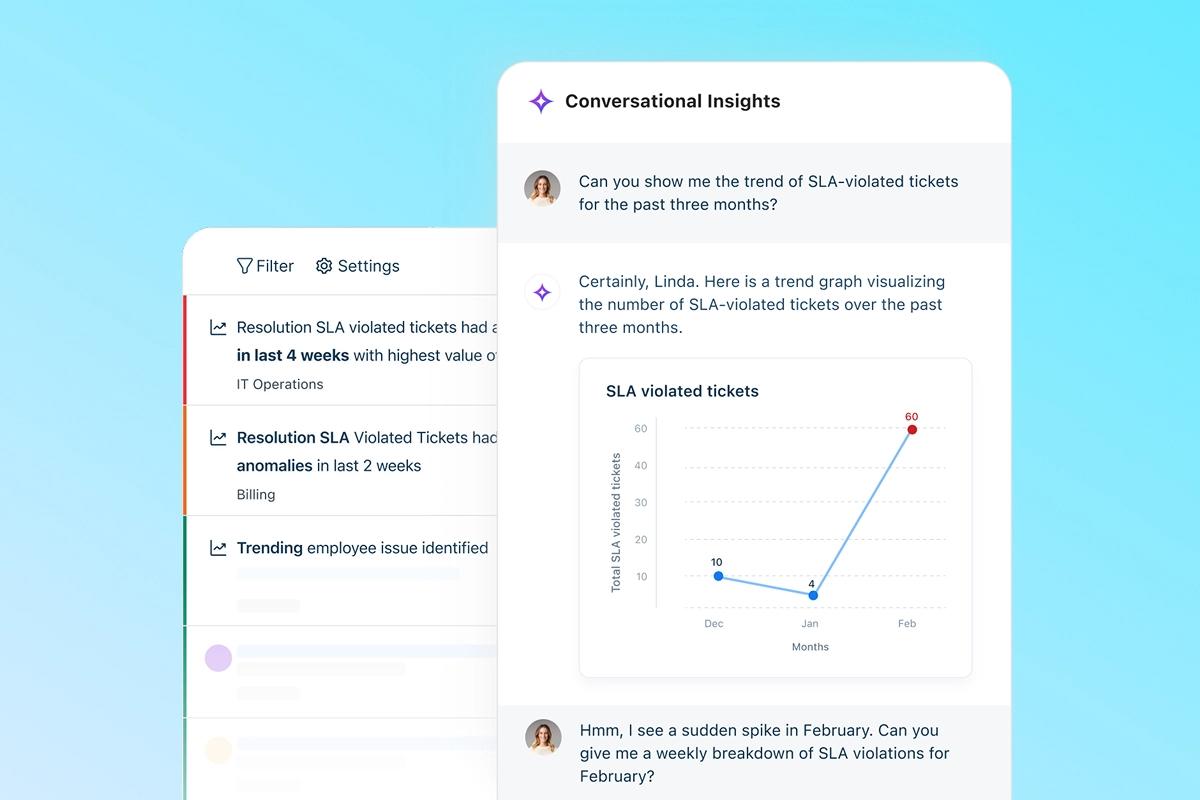
Service health monitoring and observability: Dashboards and service maps provide real-time insight into system health, availability, and SLA performance.
AIOps capabilities: Machine learning models help identify anomalies, predict failures, and correlate events across complex environments.
Dashboards and reporting: Customizable dashboards and analytics support operational reporting, trend analysis, and executive visibility.
What is the business impact of ITOM?
Effective ITOM delivers a range of measurable outcomes for both IT teams and the business, such as:
Reduced MTTR and MTBF through faster detection and response
Improved service uptime and SLA adherence
Greater visibility across complex IT environments
Cost optimization via automation and proactive monitoring
Increased operational resilience and scalability
As infrastructure complexity grows, ITOM tools play a critical role in maintaining service reliability and customer experience.
What are the top ITOM tools in 2026?
The ITOM market includes a mix of enterprise platforms and modern SaaS-first solutions. The following tools are commonly recognized as market leaders by industry analysts and buyers alike:
1. Freshservice
Freshservice by Freshworks provides modern IT operations tools designed for visibility, automation, and ease of use. Its approach emphasizes faster time-to-value, intuitive workflows, and AI-assisted insights for infrastructure and operations teams managing hybrid environments.
2. ServiceNow
ServiceNow is an enterprise ITOM platform known for scale, deep CMDB integration, and advanced AIOps capabilities. Often used in large, complex environments with mature ITSM practices.
3. ManageEngine OpManager Plus
A comprehensive ITOM suite focused on network and infrastructure monitoring, offering granular visibility and strong on-premises support.
BMC ITOM
An enterprise-grade ITOM platform with advanced analytics, event correlation, and automation for large-scale operations teams.
Summary
The best ITOM tools in 2026 will enable organizations to manage increasingly complex IT environments with greater visibility, intelligence, and automation. As cloud adoption and hybrid infrastructure become the norm, IT operations management platforms must support real-time analytics, AI-driven insights, and seamless automation. By aligning ITOM strategy with modern operational needs, organizations can improve service reliability, reduce costs, and build resilient digital operations.
FAQs
Q: How is ITOM different from ITSM?
A: ITOM focuses on maintaining the health, availability, and performance of IT infrastructure such as servers, networks, applications, and cloud resources. Its primary goal is to ensure systems run smoothly and reliably. In contrast, IT Service Management (ITSM) concentrates on managing IT services delivered to users, including incidents, service requests, and changes. While ITSM is service- and user-focused, ITOM is infrastructure- and operations-focused.
Q: What problems does ITOM solve?
A: ITOM addresses common operational challenges such as limited visibility into infrastructure, frequent outages, alert noise, and slow incident resolution. By providing real-time monitoring, automated discovery, and proactive issue detection, ITOM helps organizations identify problems before they impact users, reduce downtime, and improve overall system reliability.
Q: How does ITOM support cloud and hybrid environments?
A: ITOM supports cloud and hybrid environments by providing unified visibility across on-premises infrastructure, public cloud, and private cloud platforms. It continuously discovers cloud resources, maps dependencies, and monitors performance across dynamic environments. This allows operations teams to manage complexity, maintain service reliability, and quickly respond to issues regardless of where workloads are hosted.
Q: What are the key benefits of implementing ITOM?
A: Implementing ITOM enables organizations to improve service availability, reduce mean time to resolve incidents, and operate more proactively rather than reactively. Automation and intelligent event correlation lower operational effort, while better visibility into infrastructure and service health helps IT teams align operations more closely with business outcomes.