Freshworks acquires Robusta to bring AI-powered incident investigation and prevention to Freshservice
Robusta acquisition advances Freshworks' AI-powered service operations platform, connecting AI diagnostics with modern incident orchestration across Freshservice and FireHydrant to investigate, resolve, and prevent outages before they disrupt business operations



Today, Freshworks announced that we've acquired Robusta Dev Ltd., an incident intelligence engine that uses AI to investigate technology disruptions, identify root causes, and recommend remediation actions.
The acquisition strengthens Freshservice's capabilities in incident management and IT operations. It bridges the gap between deep diagnostic intelligence, IT service management, and modern incident orchestration powered by platforms like FireHydrant. Together, this ecosystem helps IT and engineering teams move faster from identifying problems to resolving them, and ultimately to preventing them altogether.
From reacting to outages to preventing them
For decades, enterprise software has built world-class emergency rooms for IT: better monitoring, better ticketing, better dashboards, better escalation workflows. But just like healthcare, the real breakthrough isn't treating symptoms faster. It's preventing the underlying conditions that cause them.
When a critical service goes down, it's the equivalent of a patient rolling through the ER doors, and every minute matters. The impact on revenue, productivity, and customer trust compounds quickly. Once an incident is declared, whether triggered in Freshservice or spun up in an incident command center like FireHydrant, responders face a high-stakes scramble. Like triage teams working without a chart, they piece together what happened across disparate monitoring tools, alert logs, ticket histories, and deployment records before they can begin treatment.
Even worse, the symptom is rarely the disease. An application times out, engineers add resources, and the ticket is closed. Hours later it happens again, because the real culprit was a network configuration change several layers deeper. And after the post-mortem is written, institutional knowledge often remains fragmented, like patient history that never makes it into the file. Teams repeat the same manual investigations when similar issues arise.
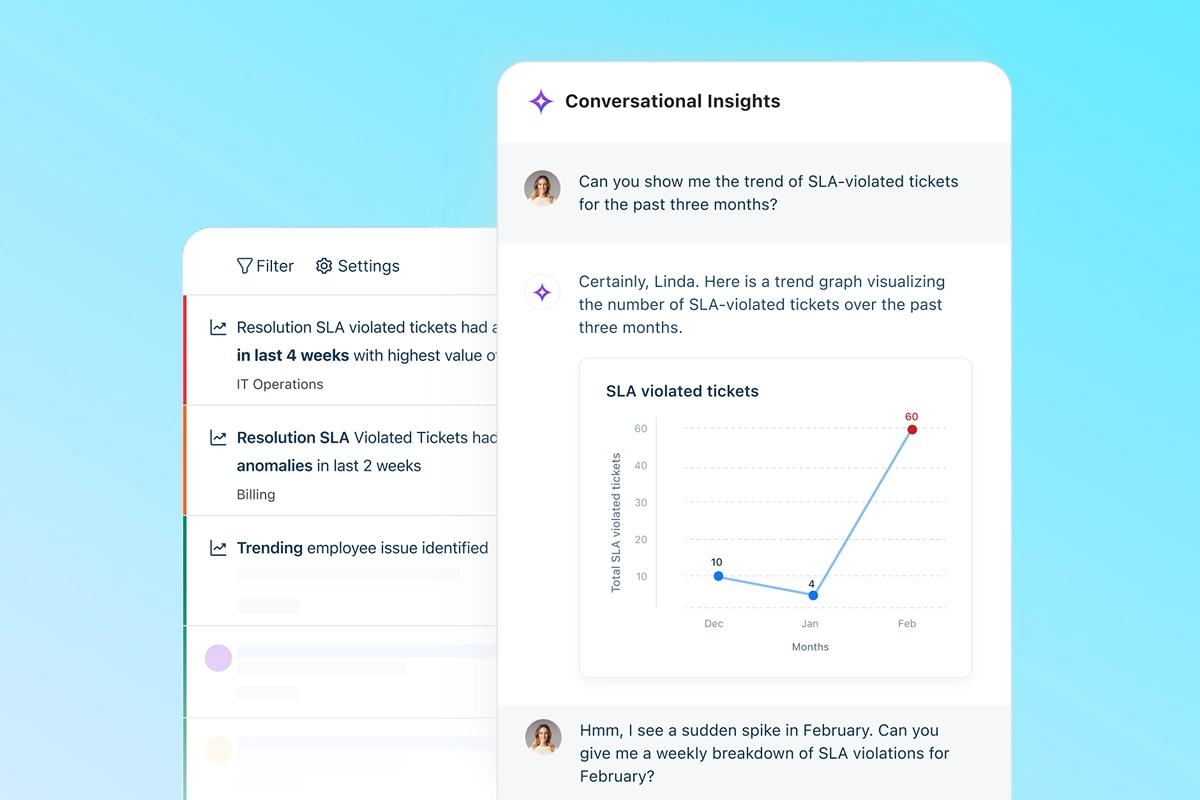
Robusta breaks that cycle. Functioning like an AI site reliability engineer that's always on call, Robusta automates the investigation of disruptions, identifies root causes, and surfaces actionable insights directly into incident workflows. Responders start with the diagnosis already underway and can focus immediately on high-impact resolution.
How Robusta works: Sense, reason, act
Robusta continuously monitors technology environments, separating meaningful signals from the noise and surfacing emerging problems before they escalate, much like catching a condition during a routine checkup instead of in the emergency room.
Sense: When an anomaly occurs, Robusta's AI Agents immediately investigate monitoring data, infrastructure telemetry, and recent code or configuration changes.
Reason: The engine pinpoints the root cause, maps the blast radius across dependent services, and provides transparent evidence behind its conclusions.
Act: It recommends remediation actions within customer-defined guardrails, allowing engineers to review and approve changes before touching production. By piping these insights directly into active incident channels, runbooks, and Freshservice records, teams gain immediate clarity without manual triage.
Robusta has been heavily optimized for very large scale production environments. For many of its customers, even momentary reliability issues can cause a loss of revenue. Yet operating AI Agents at that scale is challenging because of the volume of alerts and the complexity of their systems. Robusta's technology makes this possible and lets customers use frontier intelligence to investigate their alerts, no matter the volume.
"LLMs are fantastic at troubleshooting incidents," said Natan Yellin, co-founder and CEO of Robusta. "Our technology lets AI Agents do that effectively in large enterprise environments, where there are so many raw events that investigating each one individually would be exorbitant from a token cost perspective. We're incredibly excited to join Freshworks, which gives us the scale and platform to bring that experience to engineering teams everywhere, while keeping humans firmly in control of decisions that touch production."
Connecting IT service management, AI investigation, and incident orchestration
Bringing Robusta into Freshservice, and aligning it with incident orchestration platforms like FireHydrant, creates a single, continuous operational lifecycle. It covers diagnosis, treatment, and prevention:
Contextual investigation: Robusta investigations draw on Freshservice business service context, CMDB dependencies, and change histories to trace the origin of a disruption, so the diagnosis reflects your environment, not a generic textbook.
Orchestrated response: Diagnostic evidence, impacted services, and suggested remediation steps flow natively into FireHydrant incident timelines and Slack/Teams command channels, allowing incident commanders and responders to act on verified findings instantly.
Closed-loop prevention: Post-incident data automatically feeds FireHydrant retrospectives and updates Freshservice change-enablement guardrails, so insights from one disruption actively harden systems against the next.
What customers can expect
As Robusta's capabilities are integrated into Freshservice and connected across the broader incident management ecosystem, IT operations and engineering teams can expect to:
Cut through alert noise: Consolidate hundreds of alerts from a failing service into one investigated incident, eliminating alert fatigue and duplicate triage.
Accelerate response and orchestration: Feed AI-generated root-cause analyses, pre-populated timelines, and suggested runbooks directly into FireHydrant and Freshservice, slashing mean time to assemble (MTTA) and mean time to resolve (MTTR).
Prevent repeat disruptions: Validate changes post-deployment and turn recognized incident patterns into automated pre-flight checks, protecting stability without slowing release velocity.
Unify the full incident lifecycle: Bridge telemetry analysis (Robusta), incident response orchestration (FireHydrant), and service operations (Freshservice) so operational context carries forward rather than being rebuilt at every handoff.
The goal isn't to make the emergency room more efficient. It's to keep more patients out of it altogether.
What's next
With Robusta now part of Freshworks, our teams will work together to bring its AI-powered incident intelligence capabilities into Freshservice workflows while deepening interoperability with incident response platforms like FireHydrant.
We're excited to welcome Natan Yellin, Arik Alon and the Robusta team to Freshworks as we continue building a more connected, proactive, and resilient approach to service operations.