Inside McLaren’s race-ready IT operating model
A conversation with Mark Boulter, McLaren Racing’s director of commercial technology

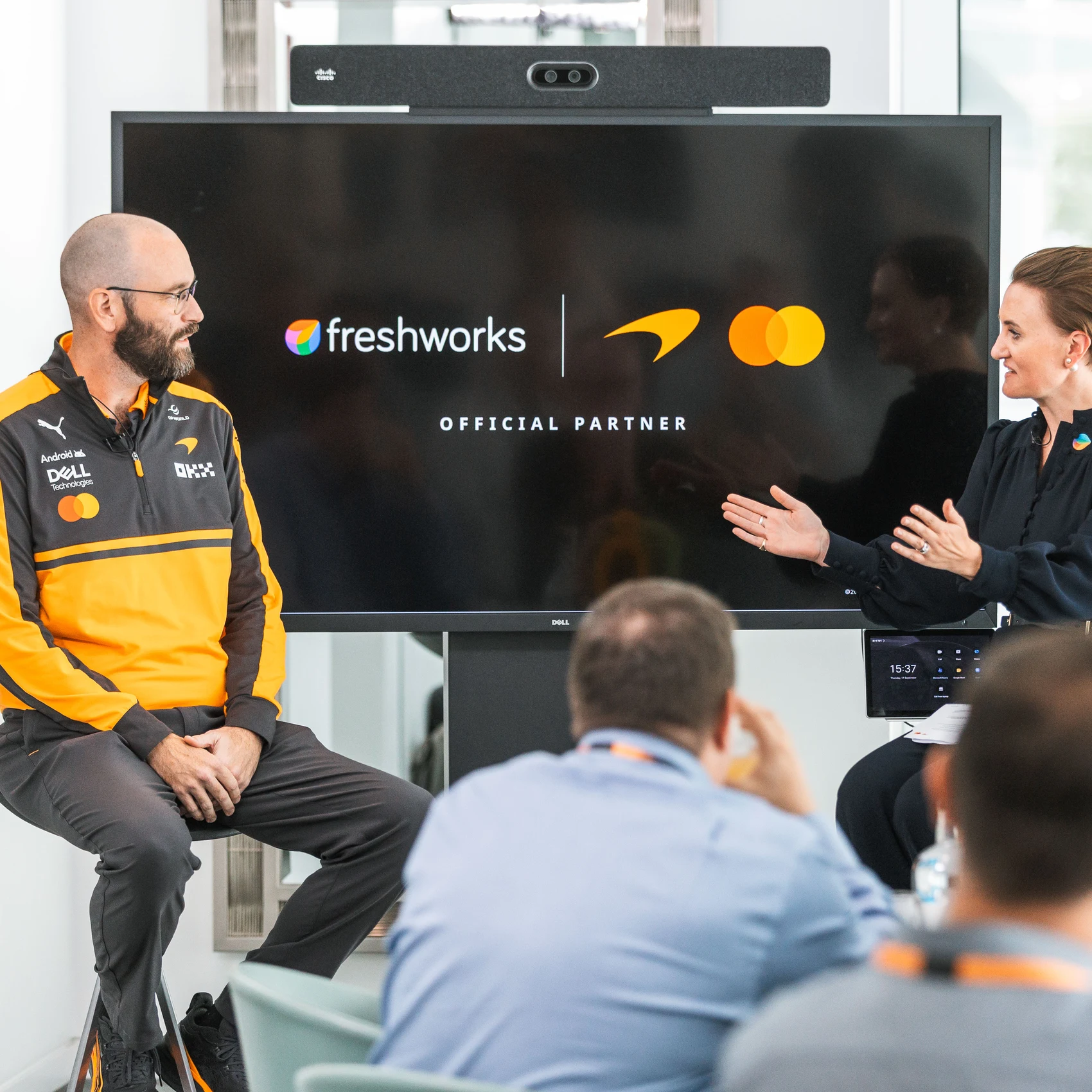


Formula 1 race weekends run on a paradox: blistering speed, built atop months of meticulous preparation. Few understand that balance better than Mark Boulter, director of commercial technology at McLaren Racing, who’s tasked with integrating and maximizing the value of the team’s full roster of technology partners, including Freshworks.
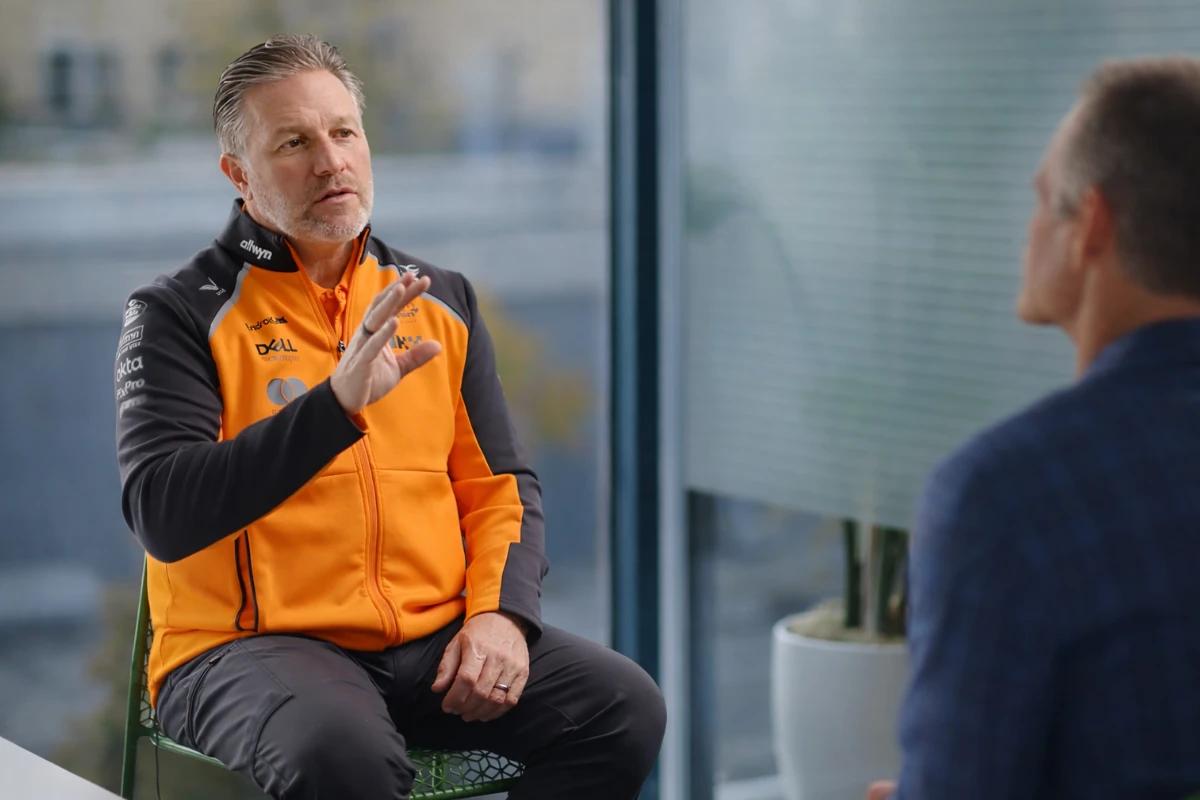
Boulter recently sat down with Freshworks' Musidora Jorgensen during a Freshworks customer event at the McLaren Technology Centre, the team’s iconic headquarters. In a wide-ranging conversation, they talked about how McLaren keeps the team’s global IT operations running smoothly, its NASA-inspired Mission Control, and how a culture built on collaboration and constant feedback helps the team make confident decisions when conditions change fast.
Musidora Jorgensen: Tell us about your role. What does it involve day to day?
Mark Boulter: It's a pretty cool job. My role is director of commercial technology, so I look after all our tech partners. I make sure we're integrating those partners across the business, whether it's Dell, Cisco, Google, or Freshworks, to get the most out of that tech and drive performance—not just on the track, but from a business operations standpoint.
Formula 1 is often all about speed, but there's a huge amount of preparation behind the scenes. Can you tell us about the operating model that gets you ready to go that fast?
We have quite a unique operating model at McLaren. It's a fluid model: We don't build to long-term roadmaps in the traditional sense. We have process engineers driving efficiencies in our workloads, but those change constantly, whether that's what's happening on track or a new technology like AI.
We also don't have time for big implementations or migrations. If you've done an ERP or CRM migration, you're looking at a 12-to-18-month project. We don't have that. We have a two-week window in the summer and a few weeks in the winter, so it's incremental change all the time—small implementations that drive as much performance as possible, without the huge transformation projects a lot of traditional businesses go through.
Case study: McLaren Mastercard Formula 1 Team enhances performance with enterprise-grade ITSM
Does that incremental approach mean you can be more agile when disruption hits?
Absolutely. Disruption sits at the heart of F1. We're dealing with weather, on-track conditions, and we have to adapt to those scenarios very quickly. We run simulations of scenarios all the time, on track and in the business, so we've got a good playbook. But you don't know what you don't know.
There are three things we drill into: people, process, and technology. On technology, we're always looking for best-in-breed solutions that are scalable with our aspirations. We want something future-proof, not something we'll have to rip out later. On people, we're very good at hiring people who can deal with those scenarios. It's often described as chaos. It's not. It's organized chaos. High stakes, high pressure, and we need people who can handle that.
How McLaren, New Balance & more turn service performance into a competitive edge

When disruption happens and Mission Control is involved, how do you make sure the incoming data leads to the correct decisions?
Mission Control is basically our version of NASA's setup. You've got a rocket, or in our case, a race car, out on a track somewhere in the world, surrounded by a pit crew in a high-pressure, noisy garage. We’ve taken the thinkers and decision-makers out of that environment and put them in a room at MTC, so they can make decisions and communicate with each other calmly.
F1 also limits how many people we can have on track for safety and space reasons, so we have a test driver in a simulator at MTC who constantly runs scenarios throughout the racing session. The car on track feeds data back to the garage and Mission Control, where people make decisions, and we run those same scenarios live in our simulator here on site. Ultimately, it's about putting the right data in the right hands at the right time.
Do you have any specialists using AI to parse the data?
We have direct data feeds, a lot of telemetry comes through specialist software, so someone watching air speed over one part of the car is just looking at that. But when we're aggregating a whole range of data for one decision-maker, we need the tools to bring it together. We do run AI models over the top of that to surface valuable data, but we try not to deploy AI for the sake of it. We go narrow and deep with AI, rather than broad and shallow.
You've got a race car out on a track somewhere in the world, surrounded by a pit crew in a high-pressure, noisy garage.
Beyond the technology, McLaren is known for its high-performance culture. What’s the secret to getting people to collaborate well when the stakes are high?
We probably all believe we're good at collaboration until the stakes are high and it falls apart. Any F1 fans will remember that in 2024, when we won the Constructors’ Championship, we weren't even in contention until about halfway through the season.
What shifted things was a collaboration culture led by Andrea Stella and Zak Brown. They embedded a person from each team into other teams. The goal wasn’t to create experts in other areas but rather to create understanding about what one person’s specialty meant to others, and to build empathy. Suddenly, everyone was thinking about the whole build and performance of the car, not just their own silo. That's true collaboration.
So everyone sees the bigger picture, owns their piece, and there's a no-blame culture when things go wrong so problems get resolved quickly?
Very much so. It's led at a culture level. Aerodynamics is a great example. We have 200 people in that group, and they run a no-meeting policy. Every discussion, every decision happens at the desks and in the bays so everyone can hear what's going on. If you're designing the front-left wing, that's going to affect the side pod and the rear wing. If you're not talking to each other, you'll end up with a mismatch—and we won't win races.
Leaders must deal with constant change across their own organizations. What lessons can you share from how McLaren stays ready for disruption?
Proper planning and people. We ingest a huge amount of data, and we use it not just for decision-making but for running scenarios. There's always a scenario you haven't mapped out, and that comes down to people: hiring the right people and building the right culture that can make decisions on the fly in a high-pressure environment.
Any final words of advice on how McLaren brings together people, process, and technology?
There's a feedback loop here that doesn't exist in most businesses. We don't have a 6- or 12-month review cycle. We run this like a sports team, because it is one. Think about a football team: training, pre-match, half-time, post-match. There’s constant analysis, constant feedback on performance.
That's not to say we analyze every email and every conversation, but for the high-stakes ones, there's constant feedback. It's a really valuable lesson, and one I'll carry with me for the rest of my career.
To learn more, explore our McLaren partnership page, or catch McLaren and Freshworks at Gartner IOCS (November 17, London).