AI transformations fail when they forget about people
Tools alone don’t make for successful service management. Wendy Turner-Williams lays out a people-focused AI transformation plan for leaders.



In the rush to roll out AI tools, are employees getting lost in the shuffle? Deloitte finds that 59% of organizations are taking a tech-focused approach—layering AI onto existing processes—without redesigning how people work with it. Those organizations are 1.6 times more likely to fall short of expected returns on AI investment than their competitors. A May 2026 Gartner report concurs: Half of enterprises without a people-centered AI strategy will lose their top talent to competitors by 2027.
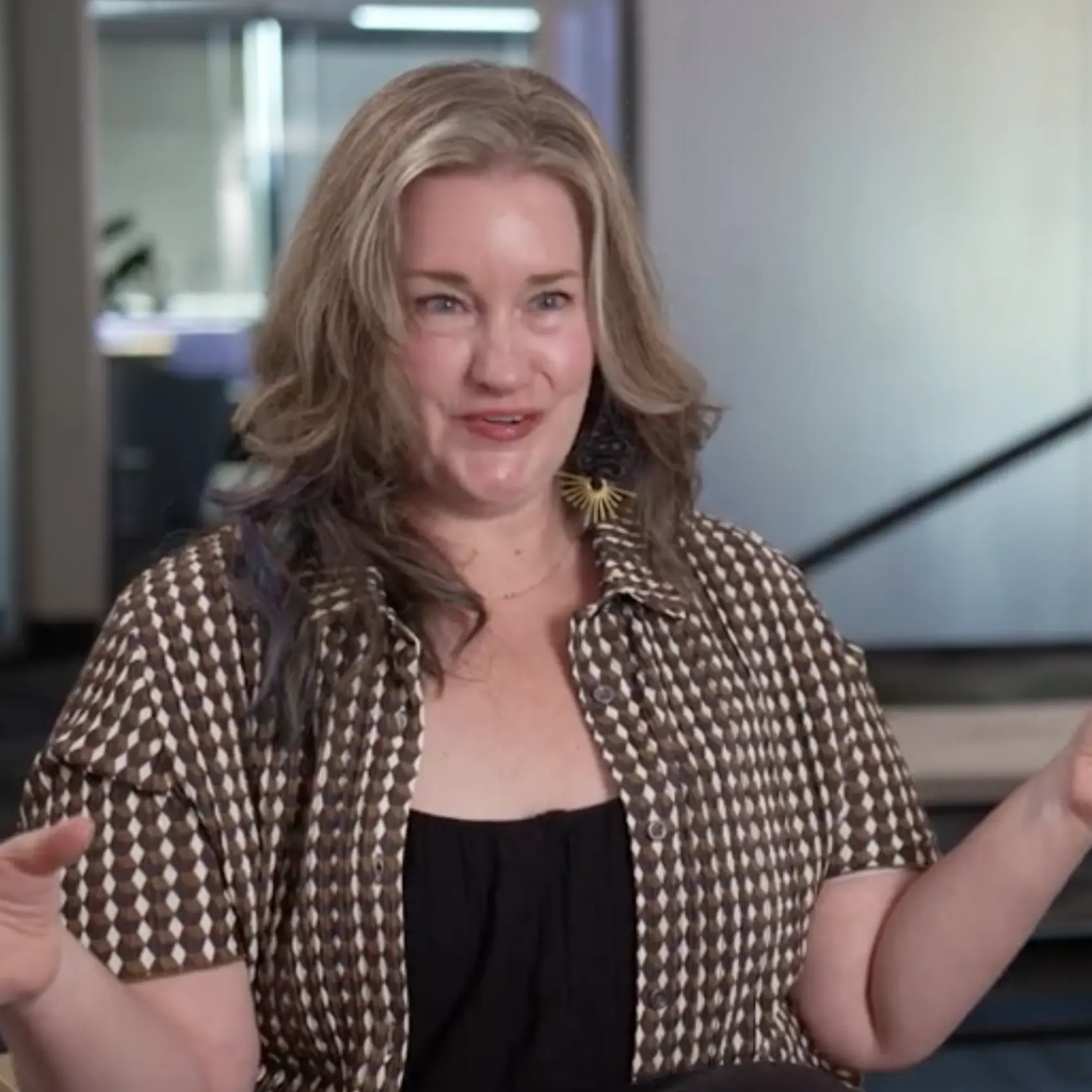
Just what does a people-first approach to AI transformation look like in practice? According to Wendy Turner-Williams, chief data and intelligence officer at SymphraAI, it involves reimagining roles, workflows, and accountability structures around the reality that humans and AI are now making decisions together.
The following is a recent conversation on where people leadership of AI strategy is lagging and how to course correct. The interview has been edited for length and clarity.
Most organizations are layering AI onto existing processes without rethinking how people work. What's driving that gap?
Wendy Turner-Williams: The biggest people mistake isn’t adopting AI too fast. It’s failing to lead people through the change. Too many organizations are focused on tools—pilots, copilots, automation—without addressing the human and organizational shifts that come with them. AI doesn’t just change systems. It changes decision-making, accountability, workflows, and how value is created across the enterprise.
Another mistake is allowing fear to fill the communication gap. When employees hear about automation but don’t hear a clear vision for how their roles will evolve, they assume the worst. If you don’t define the future of work for your team, they’ll assume AI is defining it for them.
Read more: A new, AI-inclusive org design
How should leaders approach talking with their employees about how AI will transform their jobs when it’s still a work in progress?
The key is transparency. CIOs must clearly communicate what’s changing, what new capabilities the organization needs, and how employees will be supported as roles evolve. The most successful teams will prioritize learning velocity over static job descriptions.
In an environment filled with SaaS platforms, autonomous agents, and constant innovation, someone has to ensure everything works together responsibly. The CIO’s role is to guide teams through that transition, helping them move from operational tasks toward architecture, governance, and higher-value problem solving.
Read also: The making of a new-era IT leader
What about engineers? Many fear that code-writing AI, as well as AI-powered design tools, could put their roles at risk.
The fastest way to lose strong engineers right now is to introduce AI without a strategy. When organizations deploy tools without explaining what problems they’re solving, where AI will be applied, or how teams will evolve, engineers don’t see opportunity—they see their expertise being quietly automated away.
Great engineers want to build meaningful systems. They want to know what the organization is trying to solve, where AI actually adds value, and how their role evolves as the technology matures. CIOs retain top talent when they clearly outline the roadmap: what AI will do, what humans will do, and how teams will be supported in learning the next layer of skills. Great engineers don’t want to compete with AI. They want to build it.
When employees hear about automation but don’t hear a clear vision for how their roles will evolve, they assume the worst.
Wendy Turner-Williams
Chief Data and Intelligence Officer, SymphraAI
How should leaders address the growing problem of “learned helplessness,” where workers simply defer to AI without fact-checking or questioning its output?
Preventing learned helplessness starts with building literacy and accountability into how AI is used. People need to understand how AI works, where it fails, and how to validate accuracy and quality. Trust in AI should come from understanding it—not blindly accepting it.
AI can generate answers quickly, but speed creates a false sense of certainty. Teams need to feel empowered to question outputs, validate sources, and challenge results—even when the system appears confident.
You can embed verification directly into systems—what I think of as nudges in code—agents that prompt users to validate sources, review outputs, or confirm critical decisions before acting. We’ve all heard the phrase: If your friends jumped off a bridge, would you follow? The same risk exists with “AI said it.” Critical thinking doesn’t disappear in the AI era. It becomes a skill we intentionally train.
Read also: The talent paradox
That sounds like embedding a healthy dose of AI skepticism into the culture. What other cultural norms should leaders explicitly cultivate among their workers?
One of the biggest shifts is normalizing curiosity and experimentation. In the AI era, curiosity and skepticism have to coexist. We’ve had to reinforce that experimentation—and even failure—is part of progress. If teams aren’t allowed to fail safely, they won’t innovate quickly. When those norms are explicit, teams use AI more effectively, and far more responsibly.
Transparency is another norm we’ve had to make explicit. Teams should be open about when AI was used, how outputs were generated, and where human judgment influenced the final decision. Responsible AI starts with being honest about where AI is in the workflow.
Watch Turner-Williams discuss "how to succeed in the age of AI."