AI has changed ITSM. Here’s what Gartner says to act on first.
New Gartner® report names 7 seven trends and the actions heads of I&O should take over the next 12 months



Key takeaways
AI is only as good as the service context behind it.
Report on business outcomes executives care about, rather than just activity.
Start AI agents on proven use cases, with guardrails and oversight in place.
An employee asks for help. A service goes offline. An AI agent takes action on a ticket. Each moment may look like a separate IT task, but they depend on the same fundamentals: accurate information about the services and systems involved, clear limits on what AI can do on its own, and the ability to tell whether the outcome improved the experience of the people affected.
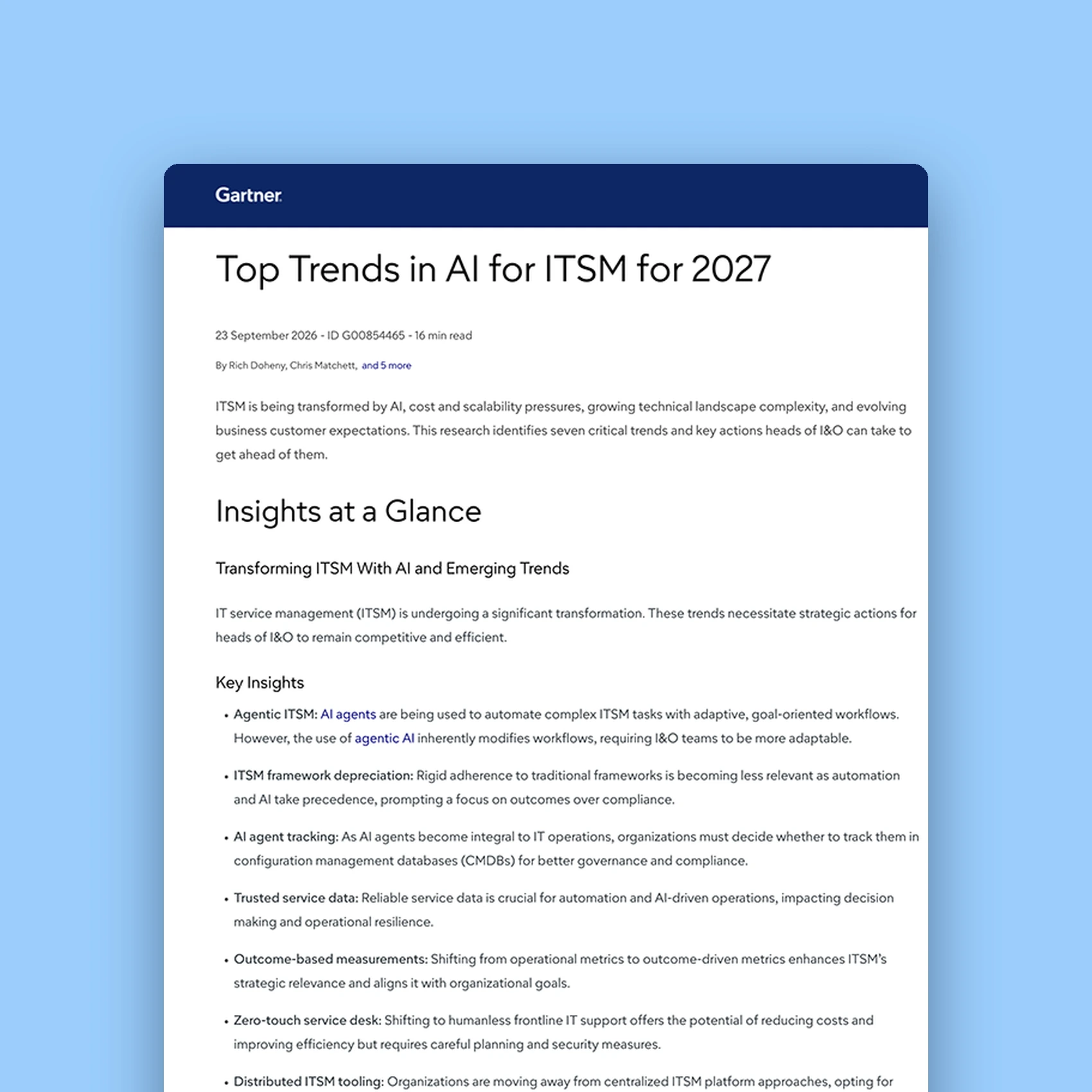
Leaders face these demands as AI takes on a larger role in service management workflows. In “Top Trends in AI for ITSM for 2027,” Gartner® identifies seven trends and actions for heads of infrastructure and operations to consider over the next 12 months. These include strengthening trusted service data, measuring business outcomes, governing AI agents, and developing an iterative path toward zero-touch support. The report offers a useful starting point for teams determining where to focus as they align AI, data, tools, governance, and workforce capabilities around better service outcomes.
Below are three takeaways worth considering, and below that, a link to download the complimentary report.
1. Smart decision-making depends on context
AI depends on accurate context: who owns a service, what it depends on, and how healthy it is. Gartner recommends focusing on operationally significant services and measuring data trustworthiness rather than completeness.
When that information lives in separate systems, both people and AI have a harder time determining what to do next. Freshservice brings service, asset, and operational context into a unified service operations platform. Freshservice ITAM brings continuous infrastructure discovery and dependency mapping directly into Freshservice, while the FireHydrant integration connects service management with real-time incident response. Together, this gives teams a clearer view of how systems support services, helps them understand potential impact, and provides AI with more reliable context for supporting decisions and workflows.
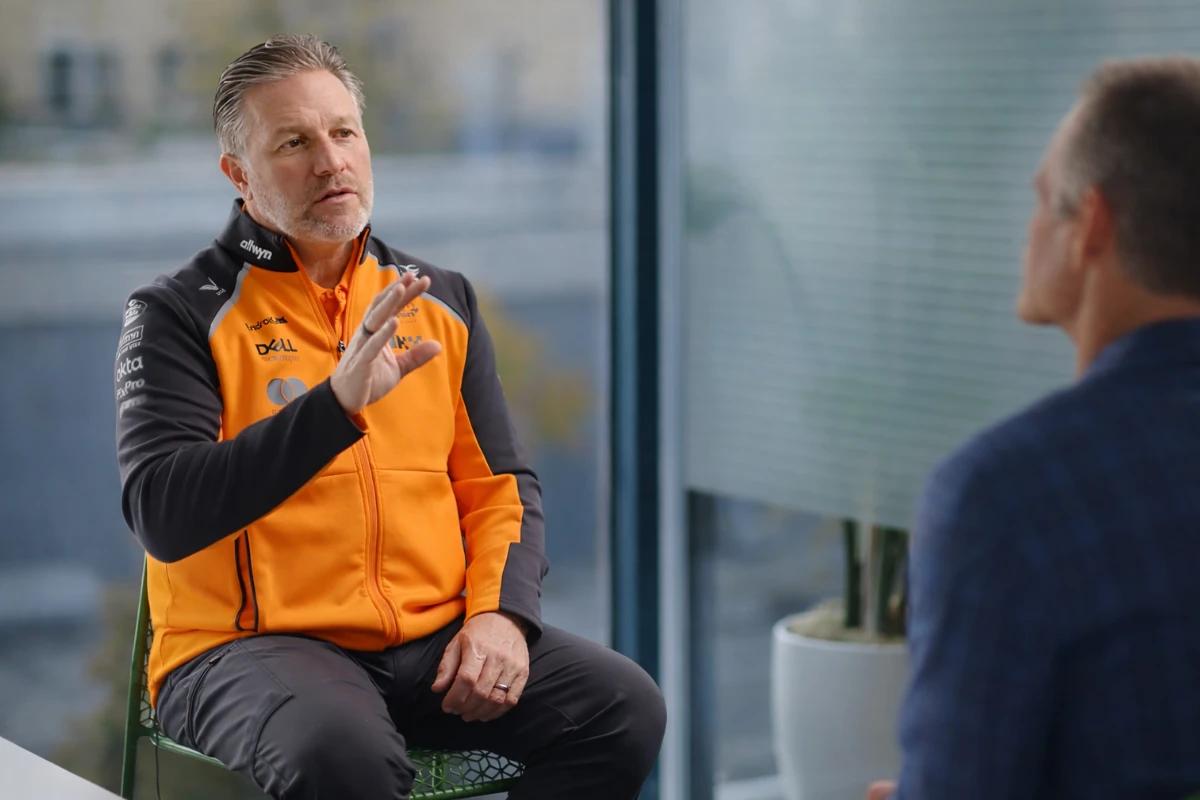
How McLaren, New Balance & more turn service performance into a competitive edge

2. Measure outcomes, not just activity
Operational metrics rarely resonate outside IT. Gartner points to outcome-driven metrics tied to revenue, cost, risk, and other key business goals.
At Freshworks, we want service leaders to see more of that picture. Capabilities such as Freddy AI Insights help IT teams understand what has improved for the people relying on a service and tell a more complete story about IT’s performance.
3. Put AI agents to work
Gartner notes that organizations increasingly use AI agents to automate complex ITSM tasks through adaptive, goal-oriented workflows. But agentic AI changes how work flows, so infrastructure and operations (I&O) teams must adapt. Start where AI already makes a difference, such as incident resolution or knowledge generation, and build in guardrails such as approvals and human oversight. According to Gartner, most organizations are adopting AI agents to handle routine tasks, with people in the loop for approvals.
Our Freddy AI Agent Studio gives teams a way to create or adapt agents for service workflows, with approvals and oversight built into established processes. The goal is to help employees complete routine tasks and give IT teams more capacity for work that needs their expertise.
Read also: Turning service data into operational intelligence
Download the full Gartner report (Top Trends in AI for ITSM for 2027) for the full analysis, and read why Gartner recognized Freshservice as a Leader in the Gartner® Magic Quadrant™ for IT Service Management Platforms.
Source: Gartner, “Top Trends in AI for ITSM for 2027,” Rich Doheny, Chris Matchett, Roger Williams, Chris Laske, Jen Lichucki, Siddharth Shetty, and Joe Rogus, 23 September 2026, ID G00854465. GARTNER is a trademark of Gartner, Inc. and/or its affiliates.