Your ITSM dashboard is only telling half the story
Stop reporting tickets and start reporting impact: Gartner® offers strategies to communicate ITSM metrics as outcomes the C-suite cares about



Picture the monthly IT review: The team reports that the service desk met its SLA, resolution times improved, and the ticket backlog eased. Metrics point in the right direction—until someone asks, What did that do for the business?
The answer should be obvious but often isn’t. A dashboard built to run the service desk wasn’t designed to show how IT protected revenue, kept employees productive, or reduced risk.
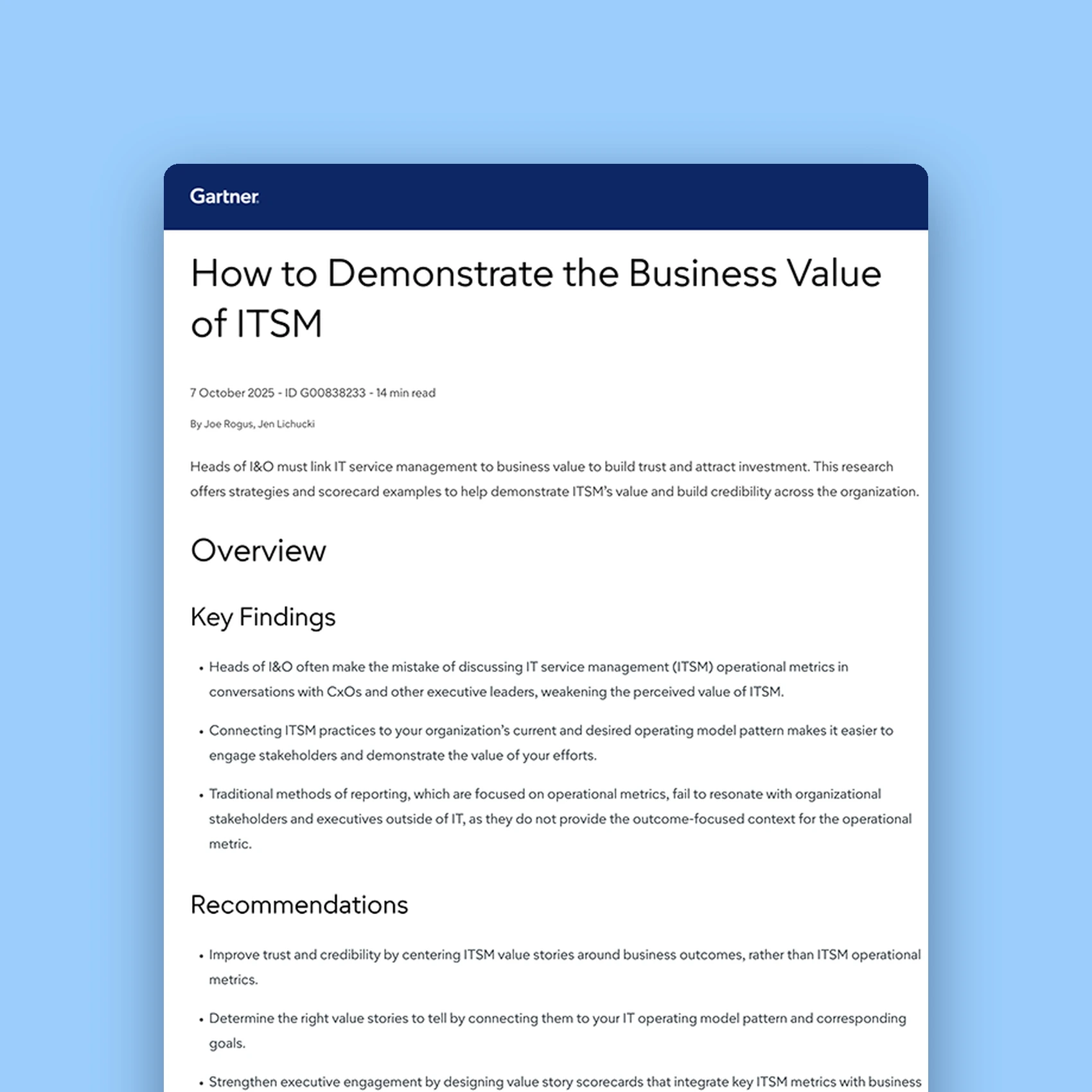
A recent Gartner® report, “How to Demonstrate the Business Value of ITSM,” tackles this problem. Its core advice for IT leaders: Stop leading with operational metrics and start with the outcomes executives care about. Three strategies stand out:
1). Start with business outcomes
Executives typically care about revenue impact, cost efficiency, and risk mitigation. Begin by working with stakeholders to identify their priorities, then connect ITSM practices and metrics back to them. As Gartner notes in the report, value is ultimately determined by the stakeholder. For example, when a payroll outage lasts 20 minutes, mean time to repair (MTTR) is the IT story. The business story is whether employees got paid on time.
2). Shape the right value story
The story that resonates beyond IT depends on the operating model and what the business expects from IT. A team focused on process efficiency might tell a cost story about time and money saved. A more service-oriented team might focus on service performance and the customer or employee experience it delivers.
Read also: The hardest seat at the table
3). Build executive-ready scorecards
Gartner recommends concise story scorecards, or one-page summaries that pair a business outcome with the ITSM metrics behind it, along with what’s been achieved and what’s next. For monthly reporting, stick to two or three at a time to avoid overload. For example:
What business priority were we supporting?
What changed for the people, service, or process involved?
Which ITSM capabilities and operational measures contributed?
What should we improve, expand, or fund next?
How McLaren, New Balance & more turn service performance into a competitive edge

Connected operations make the story possible
Telling this story effectively takes context. In many organizations, that context is scattered. Service desks, operations, asset and software management, and engineering often hold pieces of the picture. Connecting those pieces via a unified service operations platform like Freshservice, named a Leader in the Gartner® Magic Quadrant™ for IT Service Management Platforms, provides a shared view of which business services are at risk, who depends on them, and how IT responds.
It also helps with an emerging reporting problem: prevention. When IT flags a risky change before release or resolves an issue before employees notice, there’s no dramatic recovery to show. Adding measures such as incidents avoided and productive hours returned makes the invisible work visible.
The same foundation matters for AI. Armed with service history, asset relationships, policies, and live context, an AI agent can make a more informed decision, coordinate the next step, or act within the right controls.
ITSM teams have traditionally been asked to prove their business value using metrics that measure IT activity. The Gartner framework offers a better way into the executive conversation. The work may become less visible. Its value should become much easier to see.
Download the complimentary Gartner report, “How to Demonstrate the Business Value of ITSM,” for practical frameworks and scorecard examples that can help connect ITSM performance to business priorities.
Source: Gartner, How to Demonstrate the Business Value of ITSM, Joe Rogus and Jen Lichucki, 7 October 2025, ID G00838233. GARTNER is a trademark of Gartner, Inc. and/or its affiliates.