From Admin Overload to Strategic Impact: The Power of HR Workflow Automation

Jan 09, 2026
HR teams are often weighed down by a high volume of routine, repetitive requests. From answering policy questions to coordinating onboarding tasks, much of HR’s time is spent managing operational work rather than focusing on strategic initiatives that improve employee experience.
HR workflow automation helps organizations break this cycle. By standardizing and automating how employee requests are handled and how HR processes are executed, teams can reduce manual effort, improve consistency, and deliver faster, more reliable service across the employee lifecycle.
High-Impact HR Workflows Ready for Automation
Not every HR interaction needs manual handling. The fastest returns come from automating high-volume, repeatable workflows that follow clear rules.
Employee Requests and Queries: Employees frequently reach out with common questions around policies, benefits, leave, or documents. Automated self-service allows these requests to be raised through a single channel, captured as structured cases, and either resolved instantly or routed correctly without HR intervention.
Intelligent Case Routing Across HR COEs: HR organizations are increasingly structured into Centers of Excellence such as benefits, payroll, employee relations, and talent operations. Automation ensures incoming requests are automatically categorized and routed to the right HR specialist, eliminating delays caused by triaging shared inboxes.
Employee Document Requests: Requests for employment verification letters, policy documents, or standard HR forms can be automated end to end. Employees submit a request, the correct document template is triggered, approvals are applied where needed, and the document is fulfilled without manual follow-ups.
Onboarding, Offboarding, and Transitions: Key employee moments like onboarding, exits, role changes, or location transfers involve multiple teams and dependencies. Automation orchestrates these workflows across HR, IT, and Facilities, ensuring tasks are executed in the right sequence and nothing is missed.
The Strategic Benefits of HR Workflow Automation
HR workflow automation delivers value well beyond operational efficiency.
Consistency and Compliance: Automated workflows ensure that every employee goes through the same approved process. Critical steps such as policy acknowledgments, approvals, and handoffs are consistently executed and logged for audit readiness.
Faster Service Delivery: Instead of requests sitting in inboxes or chat threads, automation ensures they are captured, prioritized, and routed instantly. This significantly improves response and resolution times, meeting modern employee expectations for internal service.
Reduced Administrative Load: By removing manual coordination, HR teams spend less time chasing information or responding to repetitive questions and more time on initiatives like workforce planning, engagement, and culture.
The Role of AI in Modern HR Operations
AI is increasingly augmenting HR workflow automation, particularly at the front line of employee support.
AI-Powered Employee Self-Service Intelligent virtual agents can handle routine HR questions, guide employees to the right information, or help raise requests without navigating complex portals.
Agent Assistance for HR Teams AI can summarize long employee interactions, surface relevant knowledge articles, and assist HR agents in responding faster and more accurately.
AI-Driven Operational Insights for HR Leaders
By analyzing request volumes, categories, and resolution patterns, AI can surface trends such as recurring employee issues, workload spikes, or process bottlenecks, helping HR leaders proactively optimize resources and improve service delivery.
Best Practices for Implementing HR Workflow Automation
To ensure adoption and long-term success, organizations should take a phased and intentional approach:
Start with Employee-Facing Use Cases: Begin with high-volume workflows such as employee queries, document requests, or onboarding tasks to demonstrate immediate value.
Standardize Before Automating: Clearly define request categories, ownership, and SLAs before digitizing processes.
Design for Flexibility: Build workflows that can adapt to different employee cohorts such as full-time, contractors, interns, or remote hires.
Communicate the Change: Make it clear to employees where and how to access automated HR services to reduce confusion and drive adoption.
Why Freshservice for HR Workflow Automation
Freshservice enables HR teams to deliver fast, consistent, and scalable employee services through a unified service management approach.
AI-Powered Employee Self-Service – Freddy AI agents help employees get instant answers and raise HR requests without navigating complex systems.
Intelligent Case Management – Automatically routes HR cases to the right Centers of Excellence with clear ownership and SLAs.
Automated Document Fulfillment – Streamlines employee document requests through standardized workflows and approvals.
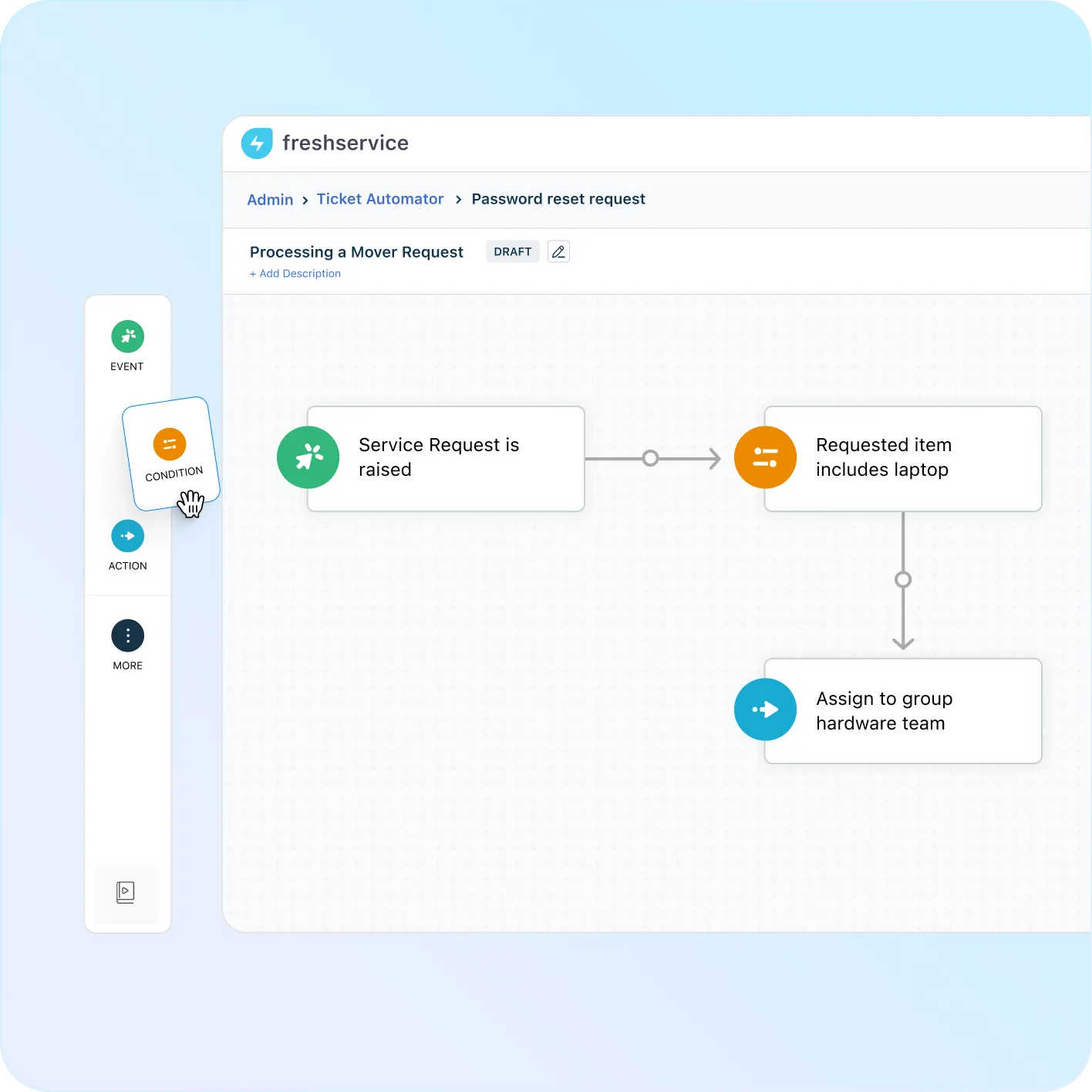
Journey-Based HR Automation – Orchestrates onboarding, offboarding, and employee transitions across HR, IT, and Facilities.
Flexible Workflow Configuration – Allows HR teams to tailor processes to their organization while supporting different employee cohorts.
Visibility and Governance – Provides real-time insights into request volumes, turnaround times, and operational bottlenecks.
By combining AI-driven self-service, workflow automation, and journey orchestration, Freshservice helps HR teams move from administrative overload to strategic impact, without losing control or compliance.