Redefining Workplace Service Delivery for the Hybrid Era

In today’s business landscape, the “office” is no longer a single physical location. It is a distributed, digital ecosystem. Whether employees work from their kitchen table, a satellite office, or corporate headquarters, their expectation for seamless, reliable support remains unchanged.
This shift has redefined workplace service delivery. It is no longer about managing buildings or resolving isolated IT issues. It is about delivering a consistent, end-to-end experience that spans IT, HR, and facilities. To succeed in 2026, organizations must move beyond disconnected tools and adopt a unified approach to workplace service management.
The Challenges of the Distributed Workplace
Hybrid work has introduced operational complexity that traditional service models were not built to handle.
The Fragmentation Gap
When IT, HR, and Facilities operate in silos, employees are forced to navigate multiple portals and processes. If a remote employee faces a VPN issue or needs workplace access, they should not have to guess which team owns the problem. Fragmentation erodes trust and slows resolution.
Complex Device and Access Management
Hybrid environments involve a mix of company-owned and personal devices, remote access tools, and evolving security requirements. Supporting this diversity requires more than ad hoc processes. It demands coordinated, digital-first hybrid work support.
The Engagement Deficit
Without regular in-person interaction, employees can feel disconnected from corporate support teams. Delayed responses or opaque processes amplify this feeling. A transparent and responsive service experience is critical to maintaining engagement and confidence in a distributed workforce.
Strategies for a Modern Workplace Service Model
Leading organizations are rethinking workplace service delivery around three core pillars.
1. An Integrated Service Management Platform
Modern service delivery depends on a single system of record. Bringing IT, HR, and facilities service management onto one platform ensures that a single request can trigger coordinated action across teams. For example, a workplace move can automatically initiate tasks for hardware setup, access provisioning, and employee record updates without manual handoffs.
2. Omnichannel, “Meet-Employees-Where-They-Are” Support
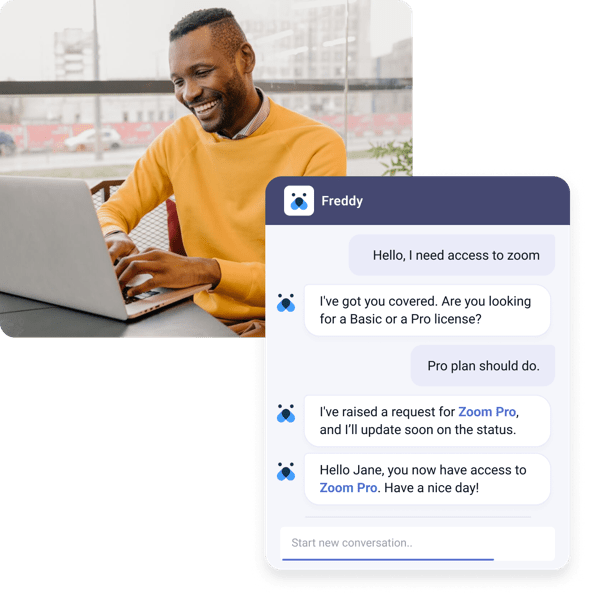
Hybrid employees spend most of their day in collaboration tools. Enabling support interactions through chat and portals allows employees to raise requests, track progress, and find answers without disrupting their workflow. Omnichannel access is now a baseline expectation, not a differentiator.
3. Proactive and AI-Driven Support
The future of workplace service management is proactive. AI-driven insights help service teams identify recurring issues, emerging trends, or service bottlenecks early. Instead of reacting to repeated incidents, teams can surface self-help resources, automate resolutions, or adjust workflows before productivity is impacted.
Technology Enablers of the Modern Workplace
Delivering consistent hybrid work support at scale requires technology that empowers both employees and service teams.
Enabler | Impact on Hybrid Teams |
AI and Automation | Resolves routine requests such as password resets or policy questions without human intervention |
Unified Dashboards | Provides leaders with real-time visibility into service volume, SLAs, and satisfaction across teams |
Self-Service Portals | Gives employees a 24/7 help center to resolve issues on their own schedule |
Culture and Governance: The Human Layer of Service Delivery
Technology alone cannot transform workplace service delivery. Organizational mindset and governance play an equally important role.
Shared Accountability Across Teams
In a hybrid environment, every function becomes a service provider. IT, HR, and Facilities must operate as one extended “workplace experience” team, aligned on service standards and outcomes.
Data-Driven Personalization
Service data can be used to tailor experiences. Patterns in working hours, locations, or request types can inform smarter routing, targeted communication, and better support coverage.
Continuous Feedback and Improvement
Modern service delivery relies on constant feedback. Pulse surveys, post-request ratings, and service analytics help organizations treat service quality as a living metric tied directly to employee satisfaction.
How Freshservice Supports Modern Workplace Service Delivery
Freshservice enables organizations to modernize workplace service delivery by bringing IT, HR, and Facilities onto a single, unified service management platform.
With Freshservice, organizations can:
Manage IT, HR, and facilities service management from one system with shared workflows and visibility
Provide employees with a unified service portal for all workplace needs, regardless of location
Enable omnichannel hybrid work support through portals and collaboration tools
Use AI-powered assistance and automation to resolve routine issues faster and reduce service load
Gain real-time insights into service performance, employee experience, and cross-team dependencies
By unifying tools, teams, and data, Freshservice helps organizations deliver a consistent workplace experience for employees wherever they work.
The Bottom Line
Modern workplace service delivery is the connective tissue of the hybrid organization. By unifying service management across IT, HR, and Facilities and prioritizing employee experience, organizations can ensure their workforce remains productive, supported, and engaged, regardless of physical location.