Winning on the grid with the right technology—and the right team
A conversation between McLaren Racing’s Zak Brown and Freshworks CEO Dennis Woodside

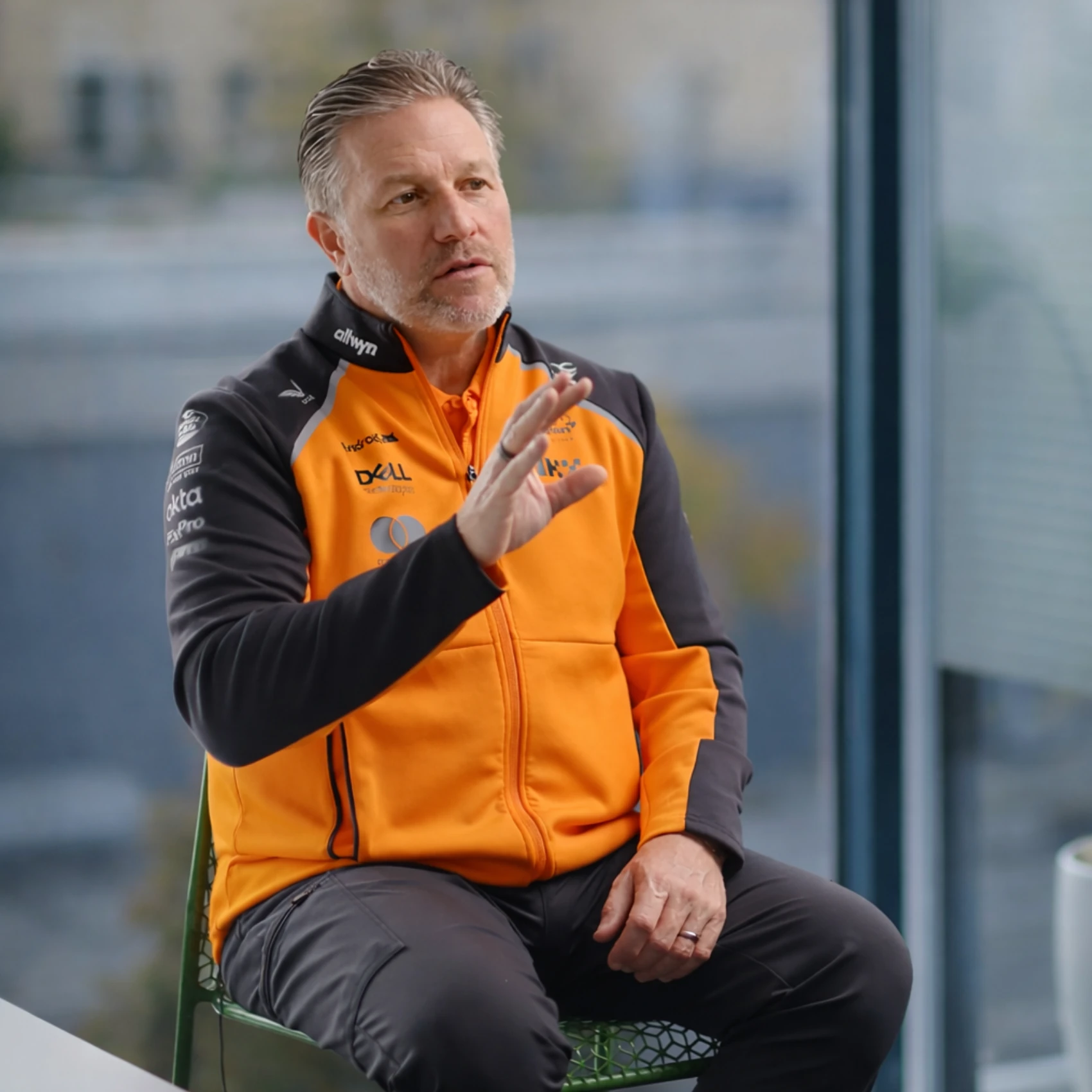


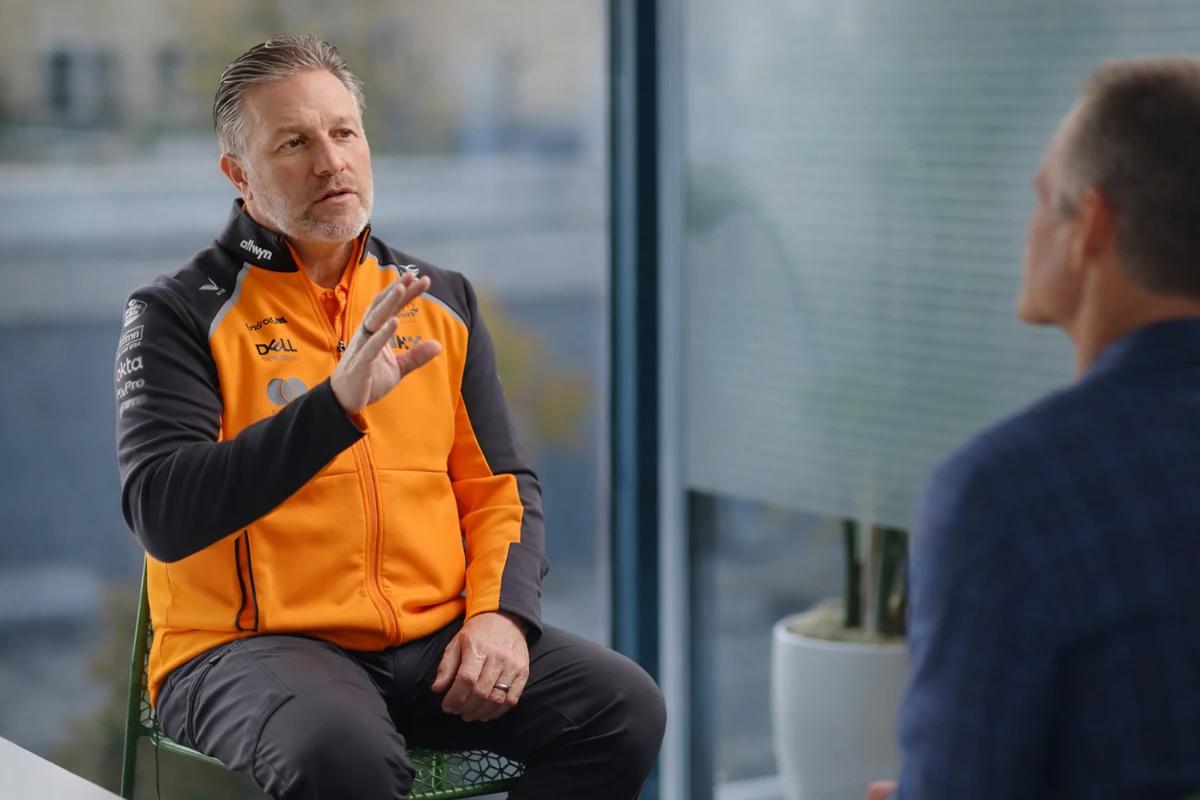
Few executives can lay claim to starting their careers by pawning game show prizes, but Zak Brown isn't most executives. The CEO of McLaren Racing sat down with Dennis Woodside, CEO of Freshworks, for a wide-ranging conversation on leadership, culture, and what it really takes to build a winning team.
From rebuilding trust inside one of motorsport's most storied teams to running 50 million simulations at Formula 1 races around the globe, Brown draws surprising parallels between the cockpit and the corner office and reveals what drives him—and the team—to keep pushing even at the top.
Dennis Woodside: Is it true you funded your start in racing by winning on Wheel of Fortune?
Zak Brown: It’s a non-traditional start, but yes! I was on "Teen Week" back in high school. I ended up winning the first two rounds, and the prizes were things like "his and hers" watches. I remember thinking, "What do I want those for?" But they came in handy. I had met Mario Andretti in 1987 and asked him how to get started in racing, and he told me to go karting. I couldn't talk my parents into paying for it, so I sold those watches at a pawn shop to fund my start.
You spent years as a professional driver before becoming a CEO. Do those skills translate?
They are almost identical. As a driver, you have to be great at communicating—talking and listening to your engineers. You need to understand risk versus reward. You need the best technology. You rely heavily on data, but you also have to use your racer’s instinct. Being a CEO is the same discipline as being a racing driver, just a little safer physically.
When you took over McLaren Racing, the team was struggling. What did you see when you first walked in?
We had lost our way. McLaren Racing is a historic team in the sport with more than 200 wins, more than 20 championships, but when I arrived, there was a lack of leadership and direction. Our fans were grumpy because we were running ninth in the championship, and we had record-low partnerships. Internally, there was a lack of trust and transparency.
How did you turn that culture around?
I tackled the people side first. Even though we are in a high-tech business, we are first a people business. It’s the people who decide how to use the technology. We focused on rebuilding trust and re-engaging with fans, which is why we brought back the iconic papaya colors. Once the team started to believe we could win again, the momentum shifted. We went from having the worst car on the grid in 2023 to winning the Constructors’ Championship in 2024.
The technology challenges in motorsport are incredible. What happens if something fails?
We can't start our race car without our whole IT infrastructure. It's not a key and a button anymore. It's a laptop. We're at 24 races around the world. We're a thousand people. And we have to be bulletproof, because if our data were to go down, we're literally out of business. So for us, it's our oxygen.
Case study: McLaren Mastercard Formula 1 Team enhances performance with enterprise-grade ITSM
That’s a lot of pressure on the technical side.
Our appetite for IT is off the charts. We run 50 million simulations a race weekend and pull down 1.5 terabytes of data. We have the car on the track, but we have "mission control" back at the factory with 60 or 70 people analyzing data in real-time.
Now that you have won, how do you keep the team hungry?
I think there are two types of people: those motivated by the thrill of victory and those motivated by the fear of defeat. I am definitely the latter. We love winning, but we hate losing. In this sport, there is no room for complacency. If you took the car that qualified first at the start of the year and left it untouched, it would be last by the end of the year. Everyone else is in a full sprint, so we have to be constantly pushing.
Where do you see McLaren Racing in the next few years?
We want to stay ahead of the technology curve, or at least be riding the big waves. That is how we make the cars faster and make better strategy decisions. And, ultimately, I want to make sure we take care of our people and our fans. Without the fans, there is no Formula 1 and no McLaren Mastercard Formula 1 Team.
Watch the full interview below: