Why an Enterprise Service Catalog Matters Beyond IT

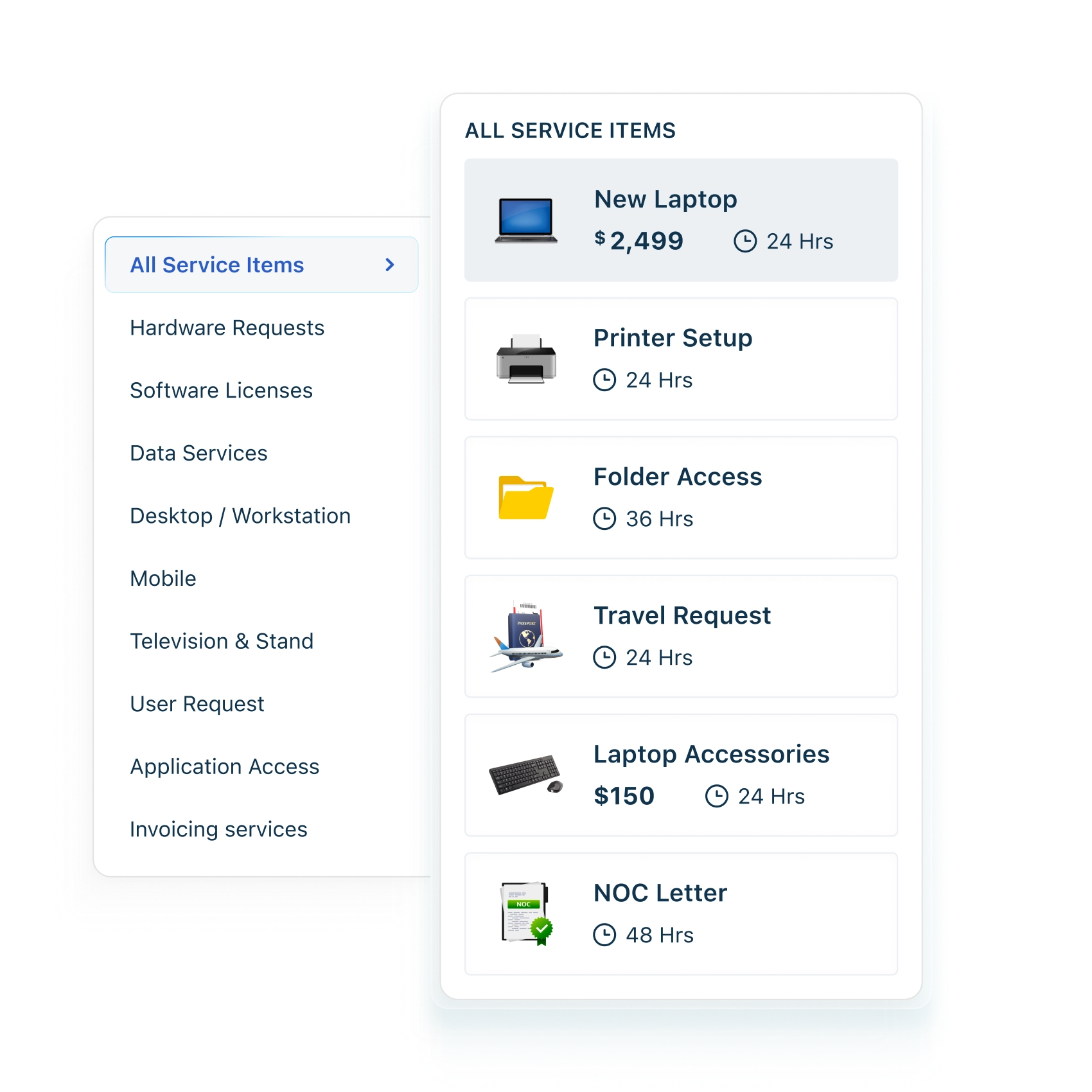
For years, the Service Catalog was the exclusive domain of IT. However, as organizations embrace digital transformation, the need for a "single pane of glass" for all internal services has become critical. An Enterprise Service Catalog moves beyond the helpdesk, providing a centralized listing of every service an organization offers its employees—from payroll queries to parking permits.
By extending the IT model to HR, Facilities, and Finance, you eliminate the "portal fatigue" that plagues modern workforces and replace it with a unified, high-velocity service culture.
Defining the Enterprise Service Catalog
An effective enterprise catalog is more than just a list; it is a front-end interface for enterprise request management.
Multi-Department Scope: Unlike a purely IT-focused list, this catalog includes HR (recruitment, benefits), Facilities (room booking, maintenance), and Finance (expense reports).
Actionable Service Entries: Every item is a trigger for an automated workflow. A "New Hire Setup" entry, for example, isn't just a request form—it is a cross-departmental engine that provisions hardware in IT and enrolls the user in benefits via HR.
The Strategic Case for a Unified Portal
Why should Architects and Service Designers push for a unified model? The benefits go far beyond simple organization:
1. Service Consistency: Employees expect the same ease of use for a plumbing issue as they do for a password reset. A unified catalog ensures that the user experience (UX) remains consistent regardless of which department is fulfilling the request.
2. Dismantling Silos: A consolidated portal encourages collaboration. When HR and IT share a platform, they can co-design workflows that cover the entire employee journey, from hire to retire.
3. Simplified Governance: Standardizing on one platform enforces uniform approval processes and fulfillment practices across the business, making compliance and auditing significantly easier.
Key Benefits of Multi-Team Request Management
Benefit | Impact on the Organization |
Unified User Experience | Employees find what they need through a familiar, searchable interface without needing to know "who" handles the task. |
Automation at Scale | Routine requests across HR or Facilities can be launched and fulfilled directly from catalog items without manual intervention. |
Cross-Service Analytics | Leaders can compare request volumes and SLA compliance across IT, HR, and Finance to allocate resources effectively. |
Implementing Your Enterprise Service Catalog: A Technical Roadmap
Transitioning to an enterprise-wide model requires careful planning around taxonomy and governance.
1. Design a Common Taxonomy
Work with department heads to agree on a shared language. You must balance departmental needs with user clarity.
Example: Should "Building Access" sit under Facilities > Access or Security > Access? Consistency in your categorization is the foundation of a searchable catalog.
2. Establish a Governance Framework
Identify who owns the data for each service. While IT might manage the platform, HR should own the description and workflow for "Benefits Enrollment." Many successful organizations establish an ESM Center of Excellence to oversee these standards.
3. Leverage an ESM-Ready Platform
The success of your catalog depends on the underlying technology. Platforms like Freshservice natively support multi-team catalogs, providing single sign-on (SSO), unified reporting, and a shared ticketing engine that makes cross-departmental collaboration seamless.
Best Practices for Long-Term Adoption
Rich Service Definitions: Ensure every item includes the service owner, expected delivery time (SLA), and any associated costs. This reduces back-and-forth communication.
Pilot and Iterate: Do not roll out every department at once. Start with one or two high-volume teams (like Facilities or Finance), gather feedback on the UX, and then scale.
Market the Portal: An Enterprise Service Catalog is only valuable if it is used. Educate employees on the new "one-stop shop" and highlight how much faster their requests will be handled through the portal vs. email.
How Freshservice Brings the Enterprise Service Catalog to Life
Freshservice is designed to operationalize the enterprise service catalog vision at scale. Rather than treating the catalog as an IT-only construct, Freshservice enables organizations to deliver a unified, employee-first service experience across HR, Facilities, Finance, Legal, and more, on a single platform.
Key capabilities include:
Unified, Multi-Team Service Catalog Departments can design and manage their own service offerings while employees interact with a single, consistent portal. Services are easy to discover, searchable, and structured around outcomes rather than internal teams.
Workflow-Driven Fulfillment Across Teams Each catalog item can trigger automated workflows that span multiple departments. A single request, such as onboarding, relocation, or role change, can orchestrate tasks across HR, IT, Facilities, and Finance with built-in dependencies and approvals.
AI-Powered Employee Self-Service Freddy AI enhances the catalog experience by guiding employees to the right service, answering common questions instantly, and reducing unnecessary tickets before they reach service teams.
Governance Without Rigidity Workspaces-based infrastructure allows central teams maintain standards for taxonomy, approvals, and SLAs, while individual departments retain ownership of their services. This balance enables consistency without slowing innovation.
Cross-Service Visibility and Analytics Leaders gain end-to-end visibility into request volumes, fulfillment times, and bottlenecks across all business functions, turning the service catalog into a strategic source of operational insight.
By combining a modern service catalog with automation, AI, and cross-functional workflows, Freshservice helps organizations move from fragmented service delivery to a truly enterprise-wide service experience.
An Enterprise Service Catalog is the cornerstone of modern internal service delivery. By centralizing requests, you provide employees with a frictionless experience while giving the business the data it needs to optimize performance across every department.