Corporate Facilities Management in the Era of Hybrid Work: From Reactive to Proactive

The shift to hybrid work hasn’t just changed where people work, it has fundamentally altered how organizations manage the physical spaces employees use. With fluctuating occupancy and flexible schedules now the norm, traditional facilities oversight models built around routine walk-throughs and manual tracking are no longer sufficient.
To maintain operational excellence, Corporate Facilities Management (FM) must evolve. This evolution requires moving away from siloed spreadsheets, shared inboxes, and informal requests, and toward centralized service management platforms that bring structure, automation, and visibility to facilities operations.
The Hybrid Challenge: Why Traditional FM is Faltering
When offices are underutilized on some days and operating at full capacity on others, facilities teams face challenges that manual processes struggle to handle:
Unpredictable Service Demand Workplace systems like HVAC, lighting, and shared equipment are no longer used on a consistent schedule. Without structured reporting and centralized request handling, issues may be reported late, duplicated, or missed entirely, leading to higher repair costs and avoidable downtime.
The “Invisible” Office With fewer employees on-site every day, it becomes harder to ensure that cleaning, safety checks, and workplace standards are consistently met. Facilities teams need better visibility into what’s happening across locations, even when foot traffic is low.
The Request Silo Problem When facilities issues are reported through personal emails, chat messages, or hallway conversations, they lack prioritization, ownership, and traceability. This not only slows response times but can also introduce safety and compliance risks.
Transforming Facilities Service Management Through Technology
Modern facilities teams are adopting service management platforms to bridge the gap between physical infrastructure and digital operations, bringing order to what was once reactive and fragmented.
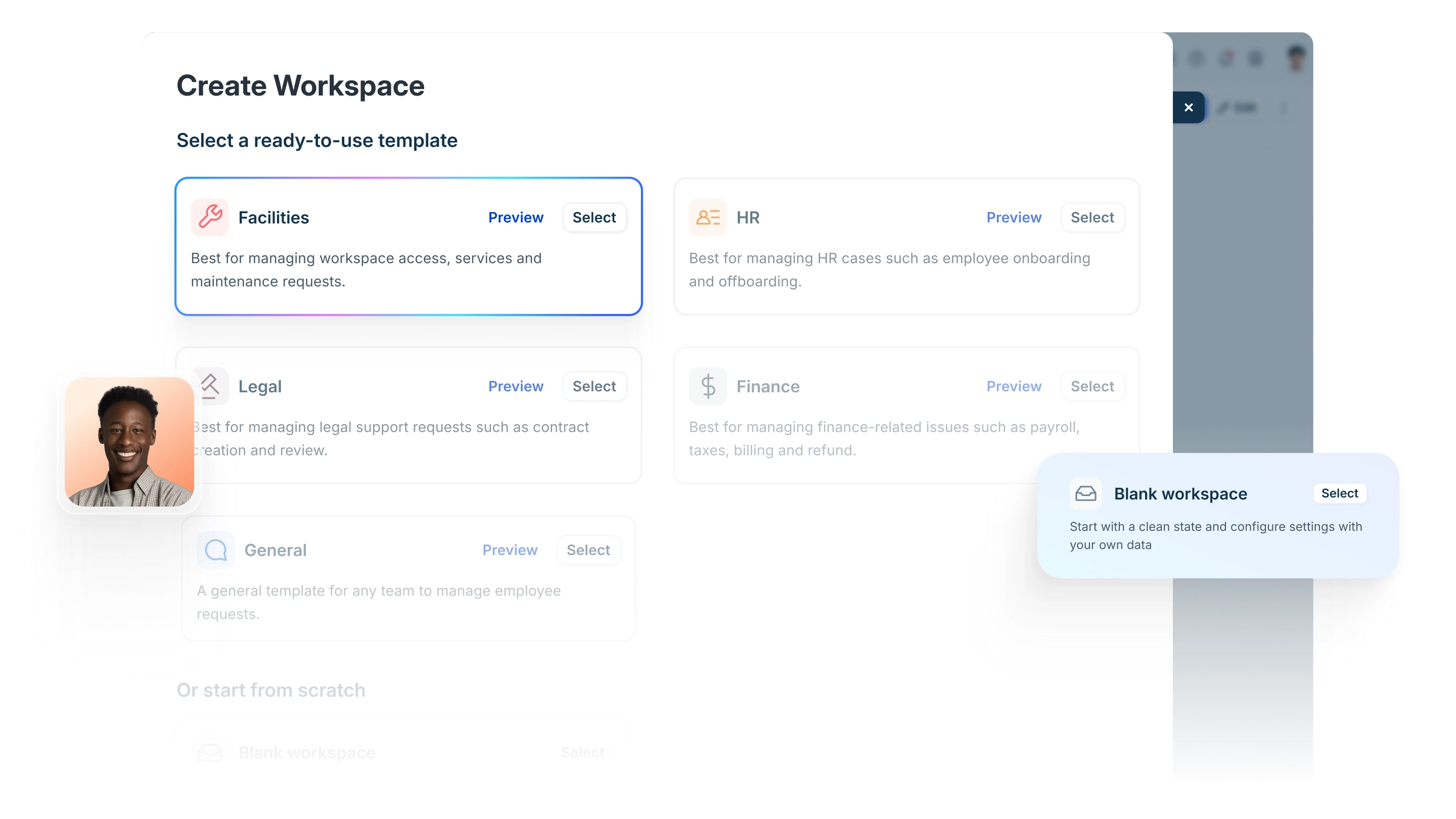
1. A Unified Workplace Service Portal: A single entry point for all facilities-related requests—such as equipment issues, workspace changes, or safety concerns—eliminates fragmented communication. Each request is logged, categorized, prioritized, and assigned, ensuring faster response and consistent execution.
2. Automation of Routine Facilities Work: Facilities excellence isn’t just about fixing what breaks—it’s about standardizing how work gets done. Workflow automation helps schedule recurring tasks like inspections, audits, and vendor follow-ups, while built-in escalations ensure nothing falls through the cracks.
3. Data-Informed Facilities Operations: Facilities teams increasingly rely on insights—not assumptions—to guide decisions. By integrating with workplace tools or incorporating usage and occupancy inputs from connected systems, teams can better align maintenance schedules, cleaning efforts, and space readiness with actual demand.
Rather than managing facilities reactively, organizations can shift toward more informed, responsive operations.
The Strategic Benefits of a Unified Facilities Platform
Moving to a centralized facilities service management approach delivers more than operational order, it drives measurable business impact:
Benefit | Impact on Operations |
Increased Uptime | Standardized maintenance and faster issue resolution reduce disruptions and extend asset lifespan. |
Improved Employee Experience | Faster resolution of workplace issues—such as broken equipment or climate discomfort—directly improves productivity and satisfaction. |
Better Decision-Making | Reporting and dashboards highlight recurring issues, response gaps, and workload trends to guide planning and resource allocation. |
Best Practices for Transitioning to Modern Facilities Management
If you’re evaluating a move toward a digital-first facilities model, these four principles can help ensure success:
Standardize Request Categories Define clear request types such as safety issues, equipment repairs, and office moves. Structured categorization improves routing accuracy and reporting clarity.
Integrate Across Teams Facilities work intersects with HR and IT more than ever, from new hire seating to equipment relocations. Connecting service workflows across departments ensures a smoother employee experience.
Prioritize Self-Service Encourage employees to use a branded workplace portal instead of emailing individuals. Support this with request templates and knowledge articles for common needs, reducing repetitive inquiries.
Analyze and Continuously Improve Use service metrics such as response times, resolution trends, and SLA adherence to identify bottlenecks, justify resources, and continuously improve service quality.
Get started with facilities management that works for you


Why Freshservice for Facilities Service Management
Freshservice helps facilities teams move from reactive firefighting to structured, service-driven operations, without adding unnecessary complexity.
Centralized Facilities Requests – Manage all workplace issues, moves, and maintenance requests in a single, trackable system.
Workflow Automation – Standardize request handling, approvals, escalations, and vendor coordination.
Employee Self-Service – Enable employees to raise facilities requests through an intuitive portal instead of emails or chat messages.
Asset and Location Context – Link requests to physical assets and locations to improve accountability and resolution speed.
SLA-Driven Execution – Apply response and resolution targets to facilities requests to ensure safety and operational consistency.
Actionable Reporting – Gain visibility into request volumes, turnaround times, recurring issues, and team workload.
In the hybrid era, the workplace is no longer just a building, it’s a service. By modernizing facilities service management, organizations can ensure their workspaces remain safe, responsive, and productive, no matter when or how employees choose to work.