
Try Freshteam, the top-rated HR software for free!
The current economic ecosystem is highly conducive to the birth and growth of small and medium businesses. It is no wonder, then, that we are witnessing a massive surge in startup enterprises across the globe, with many of them thriving as well. A good idea and a sound business plan, backed by the right technology, can take you further. Once your business has passed the threshold of mere sustenance and is on a growth trajectory, you’ll need to contemplate hiring your first employee.
While adding an employee to your payroll can be a catalyst to take your business to the next level, it is an important decision that needs serious thinking. There are multiple aspects to be considered. Fortunately for you, we have put together a guide of the five vital factors to keep in mind before you hire your first employee.
1. Check your workload and assess your business needs
Take a good look at your current business operations, historical performance, and sales funnel. What you need to identify are the seasonal crests and spikes in volumes. If they are far and few in between, it is usually a sign that you seem to have more workload than you can handle in certain specific events or times of the year. For example, an online shopping or e-tail store will likely see more traffic during the festive holiday season than in some of the other months of the year. During the peak season, it is natural to get swamped, and equally understandable for your impulse to hire an employee. But, spare a thought here.
Maybe you would be better off with an intern, a contractual or a part-time employee to help get you through the maddening rush rather than take the responsibility of having one full-time. The idea is to spend less while getting the support you need when your cup is full. On the other hand, if you are packed round the clock and through most of the year, to the extent of having to client new opportunities and clients, then surely you could do with a dedicated helping hand. This can also get you the much-needed work-life balance often ignored in the struggle of running your own business.
Sometimes, it may not just be about managing the workload. Your ambition to grow, scale up, or branch out into newer directions may require an influx of new talent and skills. For example you may be great at sales and marketing but might need an experienced programmer or tech expert to run quality checks and take accountability of the codes you intend to sell. The permutations are endless, and part-time employees may not offer the dedication or take the accountability that your business deserves. This is a valid business case for hiring a new employee.
2. Evaluate if you can afford a full-time employee
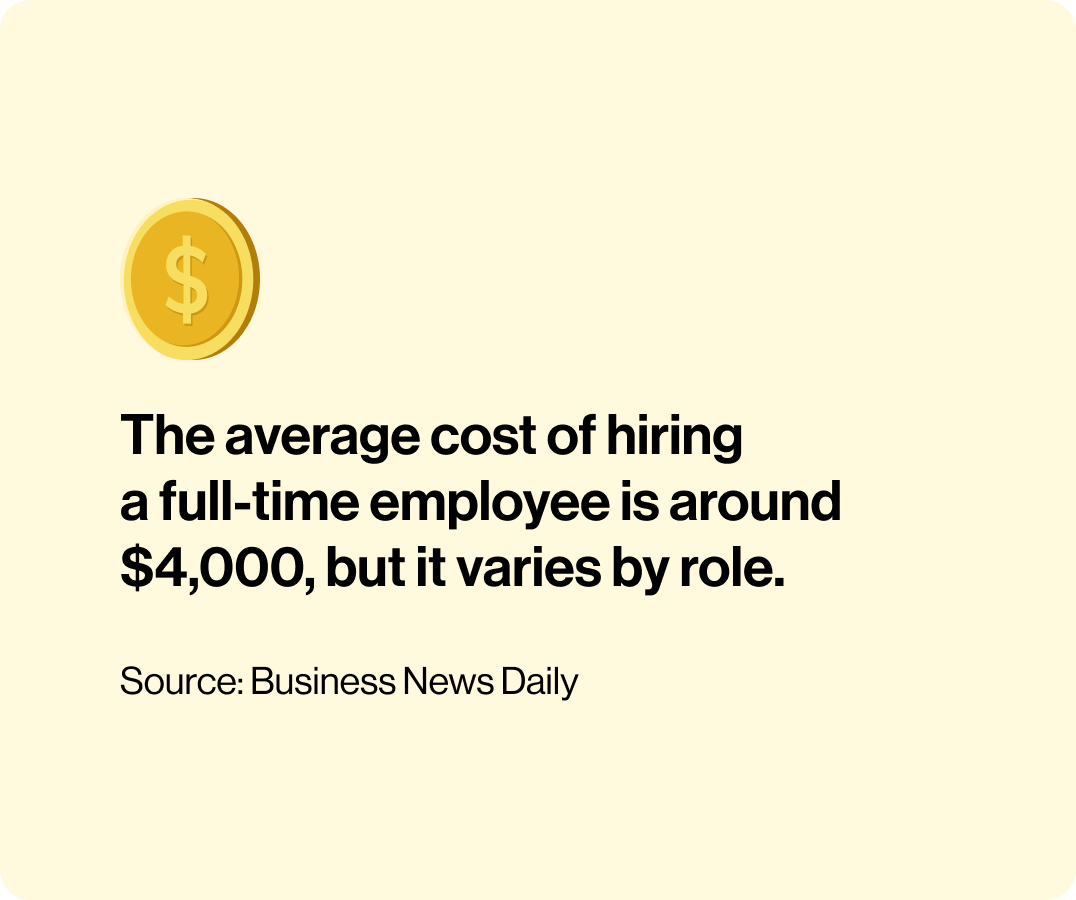
Having established your needs and reasons for hiring a new employee, you need to consider the idea’s affordability now. There is a cost involved in every step of the process. Right from advertising the job to the actual recruitment process, reference checks, and the eventual onboarding and training of the employee. This in itself can cost over $4,000 per employee. After that, you will incur costs on hourly or weekly wages, technical infrastructure (like equipment and tools for productivity), employee benefits, insurance, tax obligations, overtime and a lot more. “Does the need to hire outweigh the costs involved?”, and, “ do you have the financial wherewithal to host an employee on your payroll?”are two of the principal questions you should ask yourself at this stage.
Experts recommend creating a definite business case by quantifying a new employee's anticipated benefits (cost savings, faster TAT, higher c-SAT, increased revenue, etc.) versus the actual cost to your company (CTC).
3. Know what skills to look for in your new hire
You have done the math and can afford to hire a new employee. Moreover, the new employee is expected to add tangible and intangible value to your business. Great! The next, logical, step is to construct a framework of the ideal skills you are looking for to complement your business goals. There is a fair bit of ideation involved here. It is, also, easy to get carried away in setting unrealistic expectations from one single person. A suggested way to go about this exercise is to create 2 buckets - soft skills and specialized skills. Jot down all that you can think of, to begin with, and then narrow the skills down from your wishlist to the ones pragmatically necessary for carrying out daily operational tasks.
To get you started, soft skills can include:
- Oral and written communications skills
- Professionalism, integrity, and work ethics
- A high degree of motivation and self-management
- Problem-solving and critical thinking
- Business acumen and leadership
Some examples of specialized skills can be:
- Supply chain management and procurement
- Programming, coding
- Expertise on IT infrastructure
- Digital security protocols
- Industry and competition-specific insights
The output of this stage should be a well defined and concise job description (JD) for the role you wish to hire for, with clearly articulated roles, responsibilities and expectations.
4. Identify methods and mediums to source employees
Armed with your job role précis, you are now one step closer to hiring the person to drive your business forward along with you. Having a job description is but another step in the series. What is it good for, if the right talent doesn't see it. The next step entails identifying the right channels to advertise your job opening and hoping the perfect candidate applies for it. It must be said here, while there is no dearth of talent, there are thousands of employers seeking to hire from the same pool. The competition for hiring is at its zenith, which further exemplifies the importance of utilizing the right mediums and making your job position stand out from the crowd.
Sourcing via social networking can be extremely cost effective. LinkedIn, Indeed, Glassdoor, Facebook, GitHub, and other platforms can be very effective here, with some of them costing nothing at all. However, being new to the recruitment process, you may be well served using some expert guidance. Sourcing specialists come with an additional cost, but can use their expertise to accentuate your JD and make working for you a more attractive proposition. Moreover, they have a well established recruitment network and a large database of qualified candidates that can significantly reduce your time-to-hire while ensuring higher quality of candidates to choose from.
5. Ascertain the financial, legal, and contractual obligations
As the final step in this process, compliance with the legal and regulatory requirements of hiring an employee needs to be checked and acted upon. For instance, small businesses in the US need to pay heed to the following:
-
Applying for an EIN: An Employer Identification Number is a requirement for businesses. Consider it as a Social Security Number for organizations. It uniquely identifies your business in all your dealings with the government related to employee payroll and other regulatory matters.
-
Understand the applicable taxes: Electronic Federal Tax Payment System (EFTPS) is the most widely used platform for paying the applicable employment and business taxes. Tax withholding (W4 form) is just one of the aspects involved wherein a portion of the salary is redirected towards the payment of IRS taxes, state-sponsored health and medical, and so on. Furthermore, you will also need to understand the requirements for archiving tax-related documentation and the reporting mechanism.
-
Establish insurance and benefits systems: 401(k), workers' compensation insurance, state unemployment tax (SUTA), and other similar mandatory/optional benefits will also be duly considered.
-
Set up a payroll system: You will, also need to put in place a mechanism for recording and running the payroll for your new hire. Options include doing it manually by yourself, installing payroll management software, or outsourcing it to a specialist. The system will need to have documented procedures that determine the frequency of payment, fixed rates, variable components (if any), overtime provisions (if applicable), and so on.

In Summation
Hiring a new employee can help propel your business and add a new dimension while significantly reducing the strain on your personal life. However, as highlighted through this discourse, it needs careful evaluation. Ask yourself the questions listed above and follow the steps to make it a fruitful experience for you. If you find it overwhelming to do everything on your own, seek expert guidance from recruitment specialists who can hold your hand through the process. While this may come at a cost, it can save you a lot of hassle and ensure your new hire is an asset to your enterprise instead of becoming a liability. It will also ensure that you comply with all the regulatory requirements. The failure to do so may lead to unwanted complications and/or penalties.